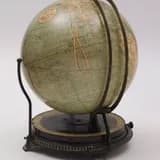
Ellen Eliza Fitz received a U.S. patent for her globe mounting system, becoming the first woman known to patent a globe mount.
On June 13, 1875, Ellen Eliza Fitz received a U.S. patent for her innovative globe mounting system, a device that became known as the Fitz Globe. The patent transformed the globe from a static classroom object into a teaching instrument that could illustrate the Sun’s apparent movement, the length of days and nights, and seasonal changes around the Earth.
This was historically significant because Fitz is widely recognized as the first woman to patent a globe-mounting system, entering a field dominated by male inventors and educational manufacturers. Her design addressed a real pedagogical problem: how to help students visualize the relationship between the Earth’s rotation, revolution, and changing daylight. In the era before modern multimedia teaching tools, such inventions materially expanded how geography and astronomy could be taught.
Fitz’s achievement also reflects the barriers women faced in nineteenth-century invention and commerce. Women’s access to technical training, patenting networks, and manufacturing capital was limited, yet Fitz produced a marketable and enduring educational device whose design continued to influence classroom globes for generations.