← All women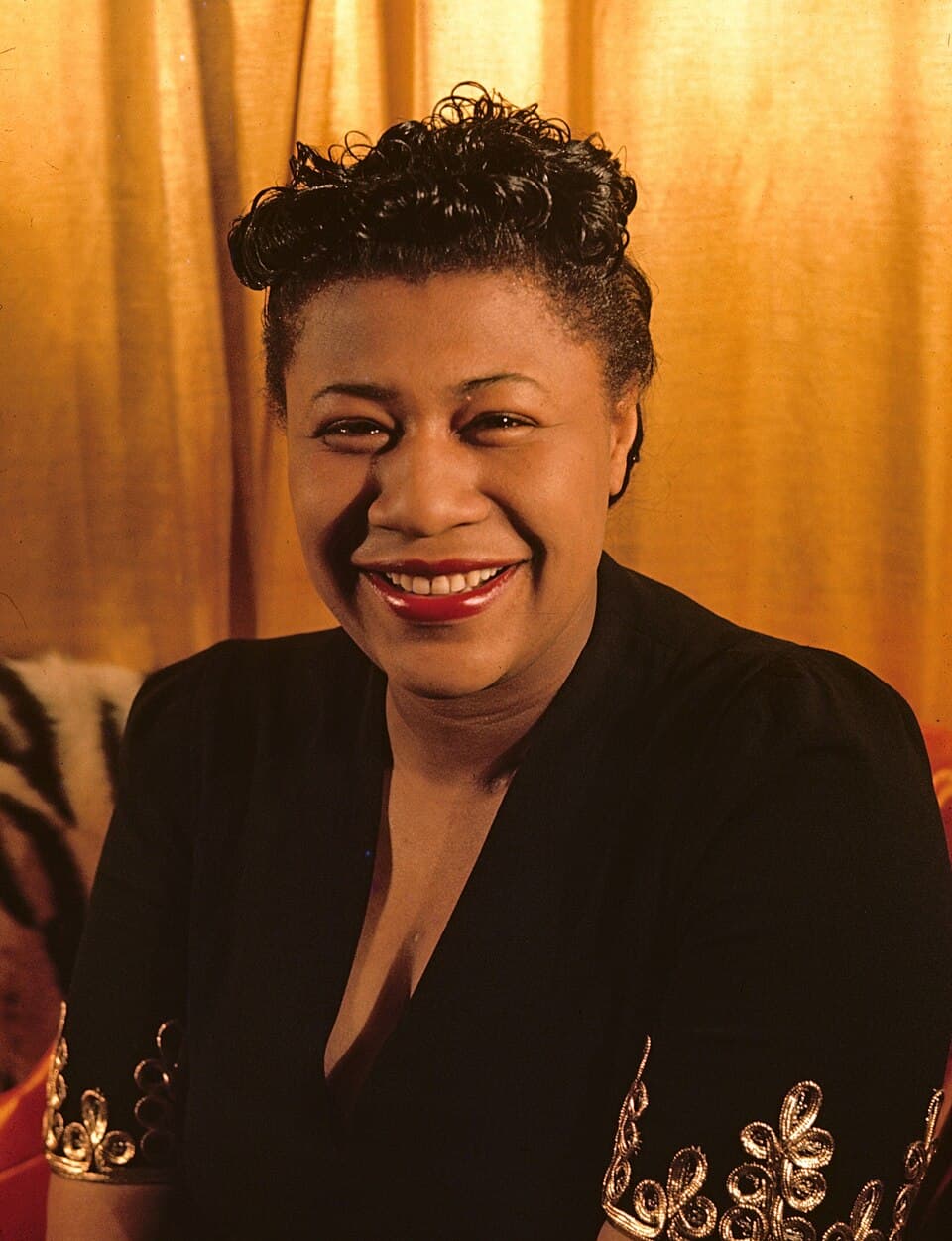
American · Arts
Ella Fitzgerald
April 25, 1917 – June 15, 1996
Early Life and Background
Ella Jane Fitzgerald was born on April 25, 1917, in Newport News, Virginia, to Temperance "Tempie" Henry and William Fitzgerald.[2][3][4] Her parents separated soon after her birth, and Ella moved with her mother to Yonkers, New York, where they lived in modest, often precarious circumstances.[2][9][12] Growing up in poverty, she contributed to the household by running errands and working small jobs, including assisting a lottery collector and working briefly in a brothel’s kitchen.[2][9]
Fitzgerald’s early education took place in the public schools of Yonkers, where she showed aptitude for mathematics and a strong interest in music and dance.[2][10] She was an avid listener to radio broadcasts, absorbing the sounds of popular singers of the 1920s and early 1930s. One of her major influences was Connee Boswell of the Boswell Sisters; Fitzgerald later recalled trying to sing everything Boswell sang, a practice that helped her cultivate her own phrasing and tone.[1][2]
Her adolescence was marked by significant upheaval. In 1932 her mother died from injuries sustained in a car accident, and Ella went to live with her aunt in Harlem.[2][9] Grief and instability led to difficulties at school and minor brushes with the law; she spent time in reform school and, for a period, experienced homelessness in New York City.[2][9][14] These hardships formed the backdrop against which her remarkable musical career would emerge.
Career Beginnings and Development
Ella Fitzgerald’s professional career began dramatically on November 21, 1934, when, at age 17, she appeared on Amateur Night at the Apollo Theater in Harlem.[1][10] She had intended to dance, but after seeing talented dancers on the bill, she chose instead to sing two songs associated with Connee Boswell. Her performance delighted the audience, and she won first prize.[1][10] This success led to further appearances at the Apollo and helped introduce her to bandleader Chick Webb.
Webb initially hesitated to hire her, reportedly unsure of her stage presence, but he was convinced by her vocal talent and brought her into his orchestra as a featured singer in the mid‑1930s.[1][3][4] With Webb’s band, Fitzgerald honed her craft as a swing vocalist, singing at Harlem’s Savoy Ballroom and touring widely.[3][4] On April 11, 1935, she gained a one‑week engagement at the Harlem Opera House, an early professional milestone that signaled her move beyond amateur status into New York’s competitive entertainment circuit.[1]
Her breakthrough as a recording artist came with the 1938 release of “A‑Tisket, A‑Tasket”, a song based on a nursery rhyme that she co‑wrote and recorded with Webb’s orchestra.[3][4][5] The record became a massive hit and reached No. 1 on the national charts on January 17, 1938, transforming her into a widely recognized star.[1] The success of the song increased demand for the band and secured Fitzgerald’s place as one of the leading vocalists of the swing era.
After Chick Webb’s death in 1939, Fitzgerald briefly took over leadership of his band, which was renamed Ella Fitzgerald and Her Famous Orchestra.[3][4] She subsequently moved toward a solo career, working with prominent bandleaders such as Benny Goodman and appearing in nightclubs across the United States.[3] During the 1940s, she adapted to the emerging bebop style, developing her signature scat singing—a form of wordless vocal improvisation that used syllables to mimic instrumental lines. Her scat work on pieces like "How High the Moon" demonstrated a remarkable ability to navigate complex harmonic changes with speed and accuracy.[3][5][15]
Major Works and Artistic Accomplishments
Fitzgerald’s recorded output is extensive, with more than 70 albums and tens of millions of records sold over nearly six decades.[1][3][8] Among her most celebrated contributions are the Songbook series recorded for Verve Records in the 1950s and 1960s. Beginning with Ella Fitzgerald Sings the Cole Porter Song Book (1956), she went on to record albums devoted to the works of Rodgers and Hart, Duke Ellington, Irving Berlin, George and Ira Gershwin, Harold Arlen, and others.[3][4]
These Songbook albums played a crucial role in defining the concept of the Great American Songbook—a body of popular songs considered central to American musical culture.[3][4][11] Fitzgerald’s interpretations combined clarity of diction, impeccable timing, and subtle swing, presenting the songs in arrangements that were accessible to mainstream audiences while remaining deeply rooted in jazz phrasing and sensibility. Her versions of standards such as "But Not for Me," "Someone to Watch Over Me," and "Let’s Do It (Let’s Fall in Love)" became definitive reference points for singers and listeners alike.[3][4]
Fitzgerald also made important contributions through high‑profile collaborations. She recorded several albums with Louis Armstrong, including Ella and Louis (1956) and Ella and Louis Again (1957), which paired her fluid, luminous voice with Armstrong’s gravelly tone and trumpet.[3][4] Work with Duke Ellington, such as Ella Fitzgerald Sings the Duke Ellington Song Book, connected her to one of jazz’s most important composers, while sessions with Count Basie in the late 1970s and early 1980s, including A Perfect Match and A Classy Pair, showcased her continued mastery of big‑band swing.[3][4]
Her artistry extended beyond studio recordings to live performance. Fitzgerald toured extensively in the United States, Europe, and beyond, becoming a global ambassador for jazz.[3][8] She appeared at major festivals, such as the Montreux Jazz Festival, where her performance documented on Digital III at Montreux later received a GRAMMY Award.[4] On television, she reached wide audiences through appearances on variety shows and specials, including the first televised GRAMMY broadcast on November 29, 1959, where the Recording Academy notes she was the first woman to command the GRAMMY stage as a broadcast performer.[1]
GRAMMY Awards and Other Honors
Ella Fitzgerald’s relationship with the Recording Academy was profound. Over her lifetime, she won 13 competitive GRAMMY Awards and received a Lifetime Achievement Award, a number that some sources describe as 14 total when the honorary award is included.[1][4][5] The most historically notable moment came at the inaugural GRAMMY ceremony honoring recordings from 1958, held on February 4, 1959. Fitzgerald won two awards—for her Duke Ellington and Irving Berlin Songbook albums—becoming the first African‑American woman to win a GRAMMY and the first woman to win multiple GRAMMYs in a single year.[1][4]
In subsequent years, she continued to receive GRAMMY recognition. She won Best Jazz Vocal Performance for Fitzgerald and Pass...Again at the ceremony held on March 29, 1977,[4] and Best Jazz Vocal Album for Fine and Mellow on March 13, 1980.[4] She earned further Best Jazz Vocal Performance, Female awards for A Perfect Match – Ella and Basie (March 24, 1981), Digital III at Montreux (March 24, 1982), and A Classy Pair (March 23, 1983).[4] On March 25, 1984, she again received the category’s award for The Best Is Yet to Come, and on March 2, 1988 for Easy Living.[4] One of her final GRAMMY honors came on February 20, 1991, when she won Best Jazz Vocal Performance, Female for All That Jazz.[4]
Beyond competitive awards, Fitzgerald became the first woman to receive what is now known as the Recording Academy’s Lifetime Achievement Award, in 1967—a recognition of her overall contributions to recording history.[1] Although the exact presentation date is not clearly documented in the supplied sources, its significance lies in positioning a female jazz vocalist as a foundational figure within the Academy’s honors system.
Her accolades extended well beyond the GRAMMYs. In 1983, she was the first vocalist to receive the NEA Jazz Masters Fellowship, the highest U.S. honor in jazz, underscoring her status as the quintessential jazz singer.[6] She was inducted into the National Women’s Hall of Fame in 1986, received the UCLA Medal in 1987, and was awarded the National Medal of Arts in 1990.[3][5] In 1994, she was among the recipients of the Kennedy Center Honors, recognizing her lifetime contributions to American culture through the performing arts.[3]
On November 9, 1993, Fitzgerald received the Presidential Medal of Freedom, one of the United States’ highest civilian honors, from President George H. W. Bush.[3][6] This decoration formally highlighted her importance as a cultural figure whose music had helped shape American identity.
Personal Life
While Ella Fitzgerald’s public persona was defined by her music, her personal life was more private and sometimes turbulent. She married Benny Kornegay, a dockworker, in the early 1940s; the marriage was quickly annulled after it was discovered that he had a criminal record.[3][4] In 1947 she married Ray Brown, a noted jazz bassist who worked with Oscar Peterson and others.[3][4] The couple adopted a son, Ray Brown Jr., and for a time formed a prominent jazz family, touring together and balancing professional commitments with family life.[3]
The marriage to Brown eventually ended in divorce in 1953, largely due to the pressures of constant touring and the difficulty of maintaining family stability in the jazz world.[3][4] Fitzgerald’s career remained intensely demanding, and she spent much of her life on the road. She was known for her professionalism, kindness, and modesty, often described as shy and reserved offstage.[3][5]
Despite enormous fame, she faced ongoing challenges linked to race and gender. As an African‑American woman performing throughout the mid‑20th century, she encountered segregated hotels, discriminatory booking practices, and unequal treatment compared to white performers.[2][3][14] There are documented instances in which allies such as Marilyn Monroe used their influence to help her gain access to venues that had previously resisted booking Black artists.[3][14] Fitzgerald seldom addressed these issues publicly in confrontational terms, but her persistence in maintaining a high‑profile career in spite of them was itself a form of quiet resilience.
Later Life and Health
By the 1970s and 1980s, Fitzgerald began to experience health problems, including diabetes and cardiovascular issues.[3][4] Nevertheless, she continued to record and tour, adjusting her schedule as needed. Her voice, though naturally affected by age, retained much of its clarity and expressive capacity, and late recordings such as Easy Living and All That Jazz were widely praised.[4]
In the early 1990s, her health deteriorated more rapidly. Complications from diabetes led to severe circulatory problems, and she ultimately underwent the amputation of both legs below the knee.[3][4] Following these procedures, she largely withdrew from public performance, spending her final years in her Beverly Hills home.
Ella Fitzgerald died on June 15, 1996, in Beverly Hills, California, from complications related to diabetes.[1][3][4][12] She was 79 years old. Obituaries and tributes emphasized not only her technical brilliance but also her humanity and the warmth she conveyed through her singing. Her death marked the end of an era in vocal jazz and prompted reassessments of her place in the broader history of 20th‑century music.
Legacy and Historical Impact
Ella Fitzgerald is widely regarded as one of the most important and influential jazz singers in history.[3][5][8] Her vocal range of roughly three octaves, purity of tone, flawless intonation, and rhythmic assurance set a standard that has influenced generations of singers across jazz, pop, and soul.[3][5][15] Her scat singing, developed particularly in the 1940s, helped legitimize vocal improvisation as a central element of jazz performance, bringing the voice into closer dialogue with instruments.[3][5]
Through the Songbook recordings and her interpretations of standards, Fitzgerald played a crucial role in shaping both the repertory and the aesthetics of American popular song. Her versions often became the benchmark against which other performances were measured, and she demonstrated that jazz interpretation could coexist with respect for melodic and lyrical integrity.[3][4] This balance influenced countless vocalists, from contemporaries such as Sarah Vaughan and Billie Holiday to later artists in pop, R&B, and jazz.
In terms of institutional and social impact, Fitzgerald’s career broadened opportunities for women and African‑American artists in the music industry. As the first African‑American woman to win a GRAMMY and the first woman to win multiple GRAMMYs in one year at the 1959 ceremony,[1][4] she broke important barriers in award recognition. Her repeated honors, including the NEA Jazz Masters Fellowship, National Medal of Arts, Kennedy Center Honors, and Presidential Medal of Freedom, signaled that a Black woman who began performing in the 1930s could be formally acknowledged as a central architect of American culture.[3][6]
Fitzgerald also helped shift the status of jazz vocals within the jazz hierarchy. Historically, singers were often seen as commercial front‑figures for bands led by male instrumentalists. Fitzgerald’s mastery and the seriousness with which critics approached her work helped elevate vocal jazz to equal standing with instrumental innovation.[3][5] Her collaborations with figures such as Louis Armstrong, Duke Ellington, and Count Basie reinforced this parity, emphasizing mutual respect and artistic dialogue.
Her influence extends into education and popular understanding of jazz. Biographies, documentaries, and educational materials—from children’s encyclopedias to university courses—use Fitzgerald’s life to illustrate the evolution of jazz, the dynamics of race and gender in American entertainment, and the power of perseverance in the face of adversity.[2][10][12] Institutions such as the Ella Fitzgerald Charitable Foundation, established with her support late in life, continue philanthropic and educational work in her name, though specific dates of its founding are beyond the supplied sources.[1]
In women’s history, Ella Fitzgerald embodies the intersection of artistry and social change. Without positioning herself as an overt activist, she nonetheless expanded the visibility of Black women in mainstream culture, demonstrated that women could sustain long, decorated careers in jazz, and contributed to reconfiguring the standards by which vocal excellence is judged. Her recorded legacy, institutional honors, and enduring presence in public memory secure her place as one of the most significant women in 20th‑century music.
Dated achievements
16 indexed.
- Apr251917Science
Birth of Ella Fitzgerald
Ella Jane Fitzgerald was born in Newport News, Virginia, on April 25, 1917.
View details Ella Fitzgerald | Britannica - Nov211934Science
Wins Amateur Night at the Apollo Theater
Fitzgerald won Amateur Night at Harlem's Apollo Theater on November 21, 1934, launching her professional singing career.