← All women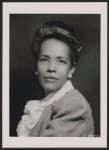
American · Activism · Politics
Ella Baker
December 13, 1903 – December 13, 1986
Early Life and Background
Ella Josephine Baker was born on December 13, 1903, in Norfolk, Virginia, to Georgiana (Anna) and Blake Baker, a working‑class African American family living under the harsh constraints of Jim Crow segregation.[3][2] Soon after her birth, she was raised partly in Norfolk and then in rural North Carolina, where her family moved to live near her maternal grandparents.[3][4][11] Growing up in communities such as Littleton, she absorbed both the solidarities and traumas of Black southern life.
Baker’s grandparents had been enslaved, and she listened closely to their stories about bondage, resistance, and Reconstruction’s betrayal.[1][11] These narratives instilled in her a deep skepticism about authority and a conviction that ordinary people could and must organize to defend themselves. As a child, she participated in collective practices such as sharing food with neighbors from her grandparents’ farm, experiences that reinforced her sense that community mutual aid was a practical and moral necessity.[7][10]
Her formal education began in local schools, including St. Anna’s Episcopal school in Warren County, North Carolina.[4] Baker was an excellent student and, according to later accounts, a questioning one: she routinely challenged teachers and administrators when rules seemed unfair or arbitrary. This habit of interrogating hierarchy would become a hallmark of her political philosophy.
In the early 1920s, Baker enrolled at Shaw University in Raleigh, North Carolina, one of the leading historically Black colleges. She worked various jobs to support herself, including waitressing, and remained outspoken about campus regulations that she saw as paternalistic and restrictive.[3][6] Her willingness to contest authority, even in a respected Black institution, foreshadowed her later insistence that movements must be democratically accountable to their base.
Baker graduated from Shaw University in 1927, reportedly as valedictorian of her class.[3][4][6] Soon afterward, she moved to New York City, joining the migration of Black southerners seeking opportunity and cultural ferment in the urban North. Her relocation to Harlem exposed her to vibrant political, artistic, and intellectual currents that would further shape her outlook.[7]
Career Beginnings and Development in New York
Arriving in New York at the height of the Harlem Renaissance, Baker entered a milieu filled with writers, artists, socialists, Garveyites, and labor activists.[7] She held a series of jobs, including work as an editorial assistant at the Negro National News, while immersing herself in the city’s debates over racial justice and economic inequality.[6]
During the onset of the Great Depression, Baker became deeply involved in economic organizing. In 1929, she began working with the Young Negroes Cooperative League (YNCL)
Baker’s role quickly expanded. By the early 1930s she was serving as a field secretary and national director, traveling to recruit members and teach cooperative principles.[6] This experience cemented her belief that economic democracy—shared ownership, collective decision‑making, and mutual aid—was essential to Black freedom. It also honed practical skills in meeting facilitation, conflict resolution, and educational outreach. Alongside her cooperative work, Baker joined and helped lead numerous Harlem organizations, including discussion groups, relief committees, and campaigns against police brutality and unemployment.[7][10] She forged ties with figures in the Black left, women’s organizations, and church circles, learning to navigate ideological differences while keeping focus on concrete community needs. These New York years were formative. As the New York Public Library later documented, Baker’s experiences in Depression‑era Harlem taught her that sustainable change required both structural critique and careful cultivation of local leadership.[15] She grew increasingly skeptical of the "great man" theory of leadership, having seen how charismatic personalities could overshadow grassroots voices and how centralized organizations could become disconnected from the people they claimed to represent. By the late 1930s, Baker’s reputation as a skilled grassroots organizer brought her into the orbit of the National Association for the Advancement of Colored People (NAACP). She began working informally with the organization around 1938 and, in 1940, officially joined the staff as a field secretary.[3][6][13] In this position, Baker traveled extensively across the South, visiting small towns and rural communities to recruit members, raise funds, and help build NAACP branches.[3][4] She listened carefully to the concerns of sharecroppers, domestic workers, teachers, and small business owners, encouraging them to see themselves as political actors rather than passive beneficiaries of outside leadership. Her approach emphasized "group‑centered" leadership: she believed that the strength of the NAACP lay in its local branches and that the national office should support, not dominate, grassroots initiatives.[16] Baker often encouraged branch members to take on responsibilities, speak in meetings, and develop campaigns responding to local conditions. In January 1943, Baker was promoted to director of branches, making her one of the highest‑ranking women in the organization.[3][4][13] She oversaw the development and coordination of hundreds of local chapters, organizing membership drives and trainings and mediating conflicts between national officers and local activists. Her tenure coincided with World War II and the "Double V" campaign—victory against fascism abroad and racism at home. Baker worked to ensure that NAACP branches could channel wartime grievances into organized demands for anti‑lynching laws, fair employment, and voting rights.[4] Despite her effectiveness, Baker faced challenges within the NAACP, including resource limitations and tensions with leaders wary of her insistence on democratizing internal structures. In 1946, she left her staff position but continued to work with the organization as a volunteer and local leader in New York.[3][13] Her experience reinforced her conviction that national civil rights bodies needed to be accountable to their members, a theme that would reappear throughout her career. In the mid‑1950s, the success of the Montgomery Bus Boycott elevated the Reverend Martin Luther King Jr. to national prominence and sparked efforts to build a regional organization of Black churches and ministers. Baker, with her extensive organizing experience, was drawn into this process. In 1957, she joined with King and other leaders—reportedly as the only woman present—to help found the Southern Christian Leadership Conference (SCLC).[4][13] On February 14, 1957, SCLC was formally established, and Baker soon became the organization’s first full‑time executive director.[3][16] As executive director, Baker handled a wide range of responsibilities: drafting organizational plans, coordinating communications between local campaigns and the Atlanta headquarters, and helping to design workshops in nonviolent protest and community organizing. She pushed the SCLC to move beyond episodic protests and to invest in long‑term, community‑based work. Baker’s relationship with SCLC leadership was complex. She shared the goal of challenging segregation but was wary of leadership structures centered almost exclusively on male clergy and charismatic speaking. She advocated that SCLC support local movements and lay activists, not just pastors, and that decisions be made collectively.[16] Her experience with SCLC confirmed both the potential and limitations of church‑centered organizing. While the organization provided important moral authority and helped coordinate campaigns, Baker felt it often underutilized the talents of women and young people. This critique would become central to her involvement in student activism. The sit‑in movement that erupted in February 1960, beginning with the Greensboro Woolworth’s protest, electrified the South and drew thousands of students into direct action.[4][3] Baker, then still associated with SCLC and based in Atlanta, recognized that these young activists needed their own autonomous structure. She organized a Student Leadership Conference at her alma mater, Shaw University, in Raleigh, North Carolina, held April 15–17, 1960.[3][4][12] At this meeting, students from across the South debated strategy and organizational form, ultimately deciding to create the Student Nonviolent Coordinating Committee (SNCC). Baker played a crucial role as advisor and facilitator. She urged the students not to become a youth auxiliary of existing organizations but to form an independent body that would remain accountable to grassroots communities.[12][13] Her emphasis on "group‑centered leadership" and participatory democracy deeply influenced SNCC’s structure and culture. Throughout the 1960s, Baker continued to work closely with SNCC. She advised campaigns such as the Freedom Rides, voter‑registration drives in Mississippi and Alabama, and the 1964 Freedom Summer project.[3][10][13] She supported the creation of the Mississippi Freedom Democratic Party (MFDP), which challenged the state’s all‑white delegation at the 1964 Democratic National Convention and exposed the exclusion of Black voters from formal politics.[13] Baker also helped link SNCC activists to older community networks and to broader human‑rights struggles. She encouraged them to see their work as part of a long tradition of Black resistance, rather than as an isolated youth rebellion. Her behind‑the‑scenes presence—organizing meetings, offering strategic counsel, and mediating internal disputes—earned her the affectionate description among some activists as the "Fundi," a Swahili term for one who teaches the craft.[3] The broader civil rights movement achieved major legislative victories during this period. The Civil Rights Act of 1964, signed on July 2, 1964, and the Voting Rights Act of 1965, signed on August 6, 1965, reflected pressures generated by campaigns in which Baker was deeply involved.[6][13] While she did not focus on lobbying or court strategy, her work building resilient grassroots organizations helped create the conditions under which such laws became politically unavoidable. In the late 1960s and 1970s, Baker continued her activism even as the classical civil rights era evolved into broader Black freedom struggles. She maintained close ties with former SNCC organizers and supported campaigns addressing economic justice, political repression, and international solidarity. She allied herself with movements against apartheid in South Africa, with efforts supporting Puerto Rican independence, and with organizations such as the Women’s International League for Peace and Freedom
Domestically, she remained engaged with prison reform initiatives and community campaigns challenging police brutality and economic disinvestment.[10][11] Her activism in this period demonstrated that she understood civil rights not as a closed historical chapter but as part of a broader human‑rights struggle that had to address imperialism, gender inequality, and class oppression. Throughout these years, Baker continued to practice and teach participatory democratic methods: careful listening, inclusive meeting facilitation, and collective strategy development. Her work influenced younger generations of activists involved in Black liberation, feminist, and antiwar movements. During her lifetime, Baker often avoided the spotlight and did not seek personal acclaim. Her contributions were primarily recognized within activist circles, where she was admired for her organizing skill and principled commitment to grassroots empowerment. In 1984, she was inducted into the National Women’s Hall of Fame in Seneca Falls, New York, a major institutional acknowledgment of her impact on U.S. history.[5] This honor placed her among a diverse group of women celebrated for their contributions to politics, social reform, science, and the arts. After her death, recognition expanded. Scholars such as Barbara Ransby, in works like Ella Baker and the Black Freedom Movement, framed Baker as a key intellectual and strategist of the civil rights era.[15][17] The Ella Baker Center for Human Rights, founded in Oakland in the 1990s, took her name to signal its commitment to grassroots, community‑based work.[1] Museums and archives have since highlighted her legacy. The National Museum of African American History and Culture and state agencies like the North Carolina Department of Natural and Cultural Resources have produced biographical features emphasizing her role as "the mother of the civil rights movement" and as an architect of participatory democracy.[4][13] Baker’s personal life was closely intertwined with her political work but followed a largely independent path. She married T. J. (Bob) Roberts, but the marriage eventually ended in divorce around 1958.[8] Sources indicate that the couple did not have children; Baker’s energies were directed toward community organizing and the nurturing of younger activists. Friends and colleagues remembered her as warm but exacting, someone who combined deep empathy with a rigorous insistence on collective responsibility. She was known for listening patiently, asking probing questions, and encouraging people who were unused to speaking publicly to share their experiences and ideas.[14] Baker lived modestly and did not accumulate wealth or institutional power. She often worked without formal titles or salaries, particularly in her later years. Her commitment to everyday people was reflected in her relationships with neighbors and comrades, who regarded her as both mentor and fellow worker in the struggle. Ella Baker is now widely recognized as one of the most important organizers of the twentieth‑century Black freedom struggle.[2][3][7] Her legacy lies less in singular, dramatic public moments than in the infrastructure she helped build: organizations, leaders, and communities capable of sustained collective action. She articulated a distinctive theory of leadership that challenged conventional models centered on charismatic individuals. Baker argued for "group‑centered" leadership and participatory democracy, insisting that movements must be accountable to their base and that ordinary people must be empowered to make decisions.[16] This philosophy profoundly shaped SNCC and influenced later feminist, antiwar, and community organizing traditions. Her work demonstrated that behind‑the‑scenes labor—organizing meetings, mediating conflicts, training volunteers, and building relationships—was essential to headline‑grabbing protests and legislative victories. Baker’s example has encouraged historians to rethink narratives that treat movements primarily as the work of a few prominent figures. Institutions bearing her name, including the Ella Baker Center for Human Rights
Her ideas resonate strongly in the 21st century, amid movements like Black Lives Matter, where decentralized structures, horizontal leadership, and emphasis on local autonomy echo Baker’s principles. Scholars and activists continue to draw on her teachings as they grapple with questions about how to sustain movements over time and how to avoid replicating oppressive hierarchies within organizations fighting oppression. In her later years, Baker remained in New York, living in Queens and staying engaged with a range of social justice causes.[4][10] She spoke at events, mentored younger activists, and maintained connections with organizations working on racial justice, peace, and international solidarity. On December 13, 1986, Baker died in New York City on her 83rd birthday.[2][3][4][11] She was buried in Queens. Her death closed a career that had begun in Depression‑era Harlem and extended through the height of the civil rights movement into the era of global human‑rights activism. In the decades since, Baker’s life has been the subject of extensive scholarly and public attention. Biographies, archival collections, museum exhibits, and digital projects such as the SNCC Digital Gateway have preserved her story and amplified her voice.[12][15] Public commemorations—like the 2023 North Carolina DNCR feature and Women’s History Month spotlights—underscore that Baker’s contributions are increasingly central to how the civil rights movement is remembered.[4][9] Ella Baker’s enduring impact lies not only in the victories achieved by organizations she helped build but also in the continuing relevance of her insistence that "strong people don’t need strong leaders." Her life offers a template for democratic, community‑rooted activism that remains vital for contemporary struggles for justice.Work with the NAACP
Southern Christian Leadership Conference (SCLC)
Founding of SNCC and Major Movement Contributions
Later Activism and Human Rights Work
Awards, Honors, and Recognition
Personal Life
Legacy and Historical Impact
Later Life and Death
Dated achievements
13 indexed.
- Dec131903Activism
Birth of Ella Josephine Baker
Ella Josephine Baker was born in Norfolk, Virginia, ushering in a life dedicated to civil rights.
View details Ella Baker – SNCC Digital Gateway - Jan011930Activism
Starts work with Young Negroes Cooperative League
Ella Baker began working with the YNCL, organizing consumer cooperatives.