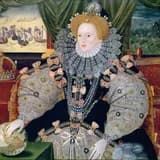
Elizabeth died at Richmond Palace, ending the Tudor dynasty and passing the throne to James VI of Scotland as James I of England.
On 24 March 1603, Elizabeth I died at Richmond Palace, Surrey, after a reign of forty‑four to forty‑five years, depending on calendrical reckoning.[2][7][1][9] Her death ended the Tudor dynasty and brought to the throne James VI of Scotland, who became James I of England, inaugurating the Stuart line.
Elizabeth’s final days were marked by ill health and contemplative withdrawal, yet she never publicly named an heir, consistent with her lifelong reluctance to acknowledge succession debates that might weaken her authority.[2][10] Nonetheless, her advisors had long prepared for James’s accession, and the transition was relatively peaceful, reflecting the stability she had helped create.
The historical significance of her death lies not only in dynastic change but in the legacy of her reign. Under Elizabeth, England had been restored to Protestantism, had defeated the Spanish Armada, and had begun to emerge as a major maritime and cultural power.[7][14][15] Her rule provided a model of female monarchy that, while not leading to a continuous line of queens regnant, profoundly influenced later perceptions of women’s capacity to govern. In cultural memory, she remained "Good Queen Bess" and "Gloriana," invoked in later centuries, including the Victorian era and twentieth‑century wars, as a symbol of resilient national leadership.[10][16] Her death thus closed a transformative chapter in English history while leaving an enduring imprint on political thought, religious identity, and women’s historical representation.