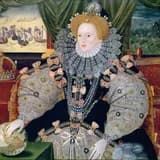
On Mary I’s death, Elizabeth acceded to the throne as Queen of England and Ireland, inaugurating the Elizabethan Age.
On 17 November 1558, following the death of her half‑sister Mary I, Elizabeth acceded to the throne and became Queen of England and Ireland at the age of twenty‑five.[2][7][9][15] Her succession ended a period of intense religious conflict and dynastic uncertainty that had seen rapid swings between Protestant and Catholic regimes.
Elizabeth’s accession is widely regarded as the beginning of the Elizabethan Age, a period during which England asserted itself as a major European power in politics, commerce, and the arts.[2][7][9] Her rise to the throne was not straightforward: declared illegitimate after Anne Boleyn’s fall and marginalized during Mary’s reign, she nonetheless managed to survive court intrigues and suspicion, demonstrating political prudence and personal resilience.
The accession carried immense historical significance. It marked the triumph of a female claimant in a patriarchal system deeply uneasy about female rule, and it placed a woman at the center of decisions about religion, foreign policy, and statecraft.[2][3] Elizabeth’s ability to command loyalty from key political elites at the moment of succession helped prevent civil war and foreign intervention. The stability she established in the wake of Mary’s violent persecution of Protestants laid the foundations for a more moderate religious settlement and the flowering of English culture. Her accession thus stands as a pivotal transition from Tudor turmoil to a comparatively more stable and prosperous monarchy.