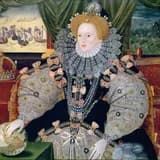
Elizabeth’s first Parliament met at Westminster, beginning the legislative work that led to the Elizabethan Religious Settlement.
On 25 January 1559, Elizabeth I’s first Parliament opened at Westminster, launching an ambitious legislative program to address religion, finances, and succession.[2][9] The session was dominated by debates on the future of the English church, as Elizabeth and her advisors sought a settlement that would end years of turmoil under Henry VIII, Edward VI, and Mary I.
Parliament provided the forum in which the Elizabethan Religious Settlement began to take shape. Through intense negotiation between the crown, bishops, and lay members, it produced the framework for a distinctly English Protestantism that, while rejecting papal authority, preserved certain traditional forms of worship.[2][7][11] The opening of this Parliament thus marked Elizabeth’s decision to work through established institutions rather than by unilateral decree, an approach that helped legitimize her policies and strengthen the relationship between monarch and Parliament.
Politically, the event was significant for a female sovereign operating in a culture that doubted women’s capacity to rule. By presiding over a major legislative initiative and using Parliament to consolidate her authority, Elizabeth demonstrated that a queen regnant could exercise effective governance. The measures initiated in this session would shape English religious and political life for generations, underpinning the later development of Anglican identity and influencing debates over royal supremacy and parliamentary rights. The opening of her first Parliament therefore stands as an early example of her pragmatic, institution‑based statecraft.