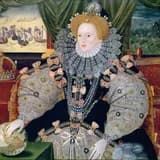
Elizabeth addressed her troops at Tilbury before the expected Armada invasion, declaring she had “the heart and stomach of a king.”
On 29 July 1588, as the Spanish Armada threatened invasion, Elizabeth I rode to Tilbury to address assembled troops, delivering a speech that has become one of the most famous declarations of female political authority in European history.[2][9] In this address, she asserted that though she had "the body of a weak and feeble woman," she possessed "the heart and stomach of a king" and of a king of England.
The Tilbury speech was crafted to inspire courage and loyalty at a moment when England faced the possibility of foreign conquest and religious re‑Catholicization under Spanish auspices.[8][11] Elizabeth’s personal presence among soldiers—unusual for a sixteenth‑century queen—was a powerful gesture that linked her physical body, often scrutinized as female and vulnerable, to the abstract idea of national sovereignty.
Historically, the speech’s significance lies in its rhetorical transformation of gender expectations. Elizabeth acknowledged contemporary views of female weakness only to subvert them, claiming kingly qualities of courage and resolve while insisting on her unique bond with her people.[3][10] The episode contributed to the myth of "Good Queen Bess" and "Gloriana," presenting her as the embodiment of English resistance to foreign tyranny. The Tilbury address has since been repeatedly invoked in times of crisis, reinforcing Elizabeth’s status as an enduring symbol of national leadership and illustrating how a woman could adapt and redefine the language of kingship.