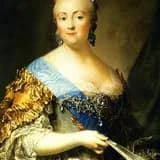
Elizabeth approved the founding of Moscow University, the first university in Russia, on the initiative of Mikhail Lomonosov and Ivan Shuvalov.
On 25 January 1755, Empress Elizabeth signed the decree establishing Moscow University (later Moscow State University), the first institution of higher learning in Russia. The founding was driven by the vision of the great Russian polymath Mikhail Lomonosov and statesman Ivan Shuvalov, who petitioned Elizabeth to create a university that would rival the great learning centers of Western Europe.
The date of 25 January holds enduring significance in Russian culture, coinciding with the feast day of Saint Tatiana, who subsequently became the patron saint of Russian students; the day is still celebrated annually as Tatiana Day, a national holiday for students across Russia.
The founding of Moscow University represented a landmark achievement in Russian intellectual history, providing formal higher education in law, medicine, and philosophy to a broader swath of Russian society, including—unusually for the time—students from non-noble backgrounds. This institution became a central pillar of the Russian Enlightenment, producing generations of scholars, scientists, writers, and statesmen who would shape Russian society for centuries.
Elizabeth's patronage of this project reflected her broader commitment to cultural and intellectual development during her reign, alongside her support for the arts, architecture, and the Imperial Academy of Sciences. The university stands today as one of the most prestigious educational institutions in Russia and the world, a lasting testament to Elizabeth's legacy as a patron of learning.