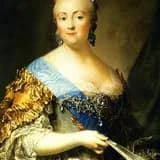
Elizabeth was formally crowned Empress of Russia in a lavish ceremony, cementing her legitimacy as ruler.
On 25 April 1742, Elizabeth Petrovna was formally crowned Empress of All Russia in the Assumption Cathedral in Moscow, the traditional site of Russian imperial coronations. The ceremony, conducted with immense pageantry befitting the daughter of Peter the Great, served to formally legitimize the authority she had already seized through the palace coup of December 1741.
The coronation was a carefully choreographed political and religious spectacle, designed to project continuity with the Romanov dynasty while distancing her regime from the unpopular German-influenced court factions that had dominated Russian politics under her predecessors. Elizabeth crowned herself during part of the ceremony, an unusual act that emphasized her personal authority and independence as a female sovereign ruling in her own right rather than as a regent or consort.
This event formally launched a reign that would last until her death in 1761, during which Russia would see significant developments in the arts, architecture, and education, including the founding of Moscow University and the construction of major Baroque landmarks. The coronation of 1742 remains a landmark moment in Russian imperial history, symbolizing the restoration of native Romanov rule and the beginning of a period often associated with cultural flourishing known as the era of Elizabethan Baroque.