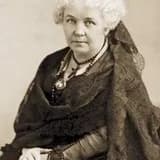
Stanton published The Woman's Bible, a controversial critique of biblical interpretations used to justify women's inequality.
Elizabeth Cady Stanton published The Woman's Bible, one of the most controversial works of her career, offering a systematic critique of the ways biblical texts and their interpretations had been used to justify the subordination of women. Stanton assembled a committee of women scholars and reformers to analyze biblical passages referencing women, arguing that religious doctrine had been distorted by male interpreters to reinforce patriarchal authority.
The work challenged the deeply entrenched assumption that women's subordinate status was divinely ordained, arguing instead that such interpretations reflected human bias rather than immutable religious truth. Stanton's willingness to critique organized religion directly—at a time when religious authority was rarely publicly challenged, especially by women—demonstrated her characteristic fearlessness in confronting all sources of women's oppression, not merely legal and political ones.
The Woman's Bible proved deeply divisive even within the suffrage movement itself. The National American Woman Suffrage Association formally voted to disassociate itself from the publication in 1896, fearing that its controversial religious content would alienate potential supporters and damage the movement's broader political goals. This controversy strained Stanton's relationship with some former allies, including Susan B. Anthony, though the two remained ultimately devoted friends.
Despite—or perhaps because of—its controversy, The Woman's Bible remains a significant early work of feminist theology and biblical criticism, anticipating later feminist scholarship that would similarly interrogate religious texts and traditions from a gender-critical perspective.