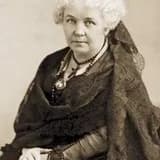
Stanton's Declaration of Sentiments, modeled on the Declaration of Independence, was presented, asserting women's equal rights.
Elizabeth Cady Stanton's Declaration of Sentiments was presented and read aloud at the Seneca Falls Convention on July 20, 1848. Stanton deliberately modeled the document's structure and rhetorical style on the Declaration of Independence, substituting "all men and women" for "all men" in its central assertion of human equality.
The document listed eighteen specific grievances against the treatment of women, mirroring the eighteen grievances against King George III in the original Declaration. These grievances addressed women's lack of the vote, exclusion from higher education and most professions, subordinate legal status within marriage (including loss of property rights and wages), and the broader cultural double standard that constrained women's moral and social autonomy.
By deliberately invoking the founding American political document, Stanton framed women's rights as a natural extension of, rather than a departure from, American revolutionary ideals. This rhetorical strategy proved highly effective in legitimizing the movement's demands within the existing framework of American political philosophy.
Educational and historical sources consistently describe this document as the launching point of the organized American women's rights movement, and it remains one of the most frequently cited texts in the history of American reform movements.