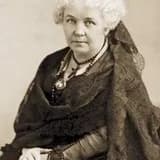
Elizabeth Cady Stanton was born in Johnstown, New York.
Elizabeth Cady Stanton was born on November 12, 1815, in Johnstown, New York, the eighth of eleven children born to Daniel Cady, a prominent lawyer and judge, and Margaret Livingston Cady.
Her early exposure to the law—through overhearing her father's clients and reading his law books—gave her a firsthand understanding of the legal disabilities faced by women in the 19th century, including inheritance and property laws that disadvantaged widows and wives. This early awareness of legal inequities profoundly shaped her later activism.
She received an unusually rigorous education for a woman of her era, studying at the Johnstown Academy and later at Troy Female Seminary (now the Emma Willard School), one of the first institutions to provide advanced education for women in the United States. Her intellectual formation, combined with exposure to reformist and abolitionist circles through her cousin Gerrit Smith, set the stage for a lifetime devoted to challenging the legal and social subordination of women.
Stanton would go on to become the principal philosophical architect of the American woman's rights movement, best known for organizing the Seneca Falls Convention and authoring the Declaration of Sentiments. Her birth in 1815 marks the beginning of a life that would fundamentally reshape American conceptions of women's rights and citizenship.