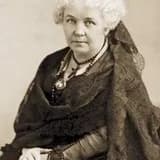
Stanton's drafted federal suffrage amendment was introduced in Congress, reintroduced annually until passage in 1920.
On January 10, 1878, a federal woman suffrage amendment drafted largely by Elizabeth Cady Stanton was formally introduced in the United States Congress by Senator Aaron A. Sargent of California. The amendment's language—stating that "the right of citizens of the United States to vote shall not be denied or abridged by the United States or by any state on account of sex"—would ultimately become, essentially verbatim, the text of the Nineteenth Amendment ratified in 1920.
Britannica notes that this proposed amendment was reintroduced in every subsequent session of Congress for over four decades until it finally passed both houses in 1919 and was ratified in 1920. Stanton herself did not live to see this achievement, having died in 1902, eighteen years before ratification.
The 1878 introduction represented a major strategic shift for the suffrage movement toward pursuing a federal constitutional remedy rather than relying solely on incremental state-by-state reforms. Stanton had long argued that women's citizenship rights should not depend on the patchwork of differing state laws, but should be guaranteed uniformly at the national level.
This amendment's introduction stands as one of Stanton's most enduring legislative legacies, directly linking her early advocacy to the eventual constitutional guarantee of women's suffrage in the United States.