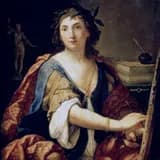
At age nineteen, Sirani received her first major public commission in Bologna from Daniele Granchi, prior of the Certosa di Bologna, launching her professional reputation.
On 28 February 1657, at just nineteen years old, Elisabetta Sirani secured her first major public commission in Bologna, awarded by Daniele Granchi, prior of the Carthusian church of the Certosa di Bologna. This commission marked a decisive turning point: rather than continuing purely as an assistant within her father's workshop, Sirani began to be recognized in her own right as a capable painter of significant public works.
Public ecclesiastical commissions of this kind were highly prestigious and typically reserved for established, guild-recognized male painters. For a young woman — one formally barred from academic art training and the professional guild structures of the period — to be entrusted with such a commission was a notable breakthrough, reflecting both the exceptional quality of her early work and the relatively progressive artistic culture of Bologna.
The success of this commission helped cement her father's decision (and the family's growing recognition) that Elisabetta could sustain the family workshop, particularly as Gian Andrea Sirani's own health began to decline due to gout. From this point forward, Elisabetta increasingly took over the operational and creative leadership of the family studio, eventually becoming its primary earner.
This early public commission set the stage for a decade of prolific production, during which Sirani would complete an estimated 200 paintings along with prints and drawings, and would be celebrated across Europe as one of the era's foremost women painters.