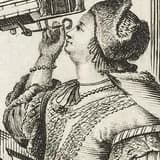
Marriage to Johannes Hevelius in Danzig, beginning her long collaboration in astronomy.
3 February 1663 is a commonly cited marriage date for Elisabetha Koopman and Johannes Hevelius in Danzig, where the ceremony reportedly took place at St Catherine’s Church. The marriage brought Elisabetha into the household and observatory of one of Europe’s most prominent astronomer-brewers, giving her direct access to the instruments, observations, manuscripts, and correspondence that defined Hevelius’s scientific world.
This was historically significant because the union was not only personal but also intellectual and practical. Sources describe Elisabetha as a capable companion in the observatory, assisting with observational work, data reduction, and later the preparation of publications. In the seventeenth century, women’s labor in science was often invisible or credited to male relatives; Elisabetha’s marriage made such collaboration possible, even if recognition came much later. The partnership illustrates a common but underdocumented pathway by which learned women participated in early modern science: through family, household, and workshop-based research rather than through universities or academies.