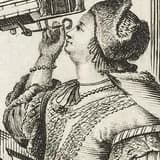
After Johannes Hevelius’s death, Elisabetha continued the observatory’s work and prepared major publications.
1687 was the turning point in Elisabetha Hevelius’s scientific life because it was the year Johannes Hevelius died, after which she continued the observatory work and helped bring his unfinished projects to publication. While the exact day of his death is not verified in the supplied sources, the year itself is clearly tied to a major transition in her career.
After Johannes’s death, Elisabetha’s role changed from collaborator to steward of a major astronomical legacy. She had to preserve notes, organize observations, oversee editorial work, and ensure that the results of decades of observing would survive. That required scientific judgment as well as administrative skill. In an era with no modern professional support structures for widows of scientists, such work was a barrier in itself: she had to maintain continuity for a research program that depended on instruments, skilled calculations, and expensive engraving. Her success laid the groundwork for the publication of the great posthumous Hevelius works that followed in 1690.