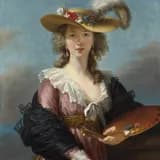
Élisabeth Vigée married art dealer Jean-Baptiste-Pierre Le Brun, after which she became known as Madame Vigée Le Brun.
On 6 February 1776, Élisabeth Vigée married Jean-Baptiste-Pierre Le Brun, a successful Parisian picture dealer and painter, in a union that would shape both her professional and personal life for decades to come. Following the marriage, she adopted the name by which history would come to know her: Madame Vigée Le Brun.
The marriage proved consequential for her career in complex ways. Jean-Baptiste-Pierre was well-connected in the art world and gave her access to important collections and clients, including exposure to Old Master paintings that enriched her technique. However, he was also known for his gambling habits, which frequently strained the couple's finances despite Élisabeth's considerable and growing income from portrait commissions.
The couple had one daughter, Jeanne Julie Louise, born in 1780, who would become a recurring subject in some of Vigée Le Brun's most tender and celebrated works, including intimate mother-and-child portraits that broke from the more formal conventions of court portraiture. The marriage would eventually end in the couple's estrangement and later divorce during the Revolutionary period, but the professional surname 'Le Brun' remained attached to her artistic identity throughout her life and in art historical記録.
This marriage occurred just as Vigée Le Brun's reputation was rising rapidly in Parisian society, setting the stage for her subsequent entrance into royal circles and eventual admission to the Académie Royale.