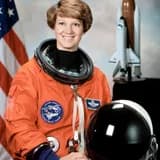
STS-93 Columbia, commanded by Eileen Collins, landed after successfully deploying the Chandra X-Ray Observatory.
Space Shuttle Columbia mission STS-93, commanded by Eileen Collins, concluded successfully on July 27, 1999, following the successful deployment of the Chandra X-Ray Observatory into orbit.
The mission had launched just days earlier amid technical challenges, including an in-flight electrical anomaly and a hydrogen leak, both of which Collins and her crew managed with professionalism and skill befitting the historic nature of the flight. As the first woman to command a Shuttle mission, Collins's steady leadership throughout the flight demonstrated that gender was no barrier to the highest levels of responsibility in human spaceflight.
Chandra, the primary payload of the mission, went on to become one of NASA's most scientifically productive space telescopes, providing groundbreaking X-ray observations of black holes, neutron stars, supernova remnants, and galaxy clusters for decades after its deployment. The successful completion of this mission under Collins's command cemented her legacy not only as a pioneering woman in aerospace but also as a highly capable mission commander whose leadership directly enabled a transformative scientific instrument to reach orbit.
This mission's success further validated NASA's confidence in Collins, setting the stage for her selection six years later to command the critical 'Return to Flight' mission following the Columbia disaster.