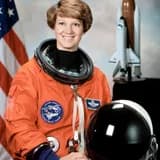
STS-63 Discovery, piloted by Eileen Collins, landed after an eight-day mission featuring the first Shuttle rendezvous with Mir and Spacelab operations.
On February 11, 1995, Space Shuttle Discovery completed mission STS-63, landing safely after an eight-day flight during which pilot Eileen Collins helped guide the orbiter through a historic close approach to the Russian space station Mir—the first such rendezvous by a U.S. Space Shuttle.
The mission also carried a Spacelab module used for a range of scientific experiments, and deployed and retrieved a Spartan satellite for solar observations. As the first woman to pilot a Shuttle, Collins's flawless performance throughout the mission, including the delicate Mir rendezvous, was closely watched by NASA leadership and the public alike, given the historic nature of her role.
The successful completion of STS-63 validated NASA's confidence in placing a woman in the pilot's seat and provided crucial operational experience ahead of the actual docking missions that would begin later that year. It also solidified Collins's reputation as an exceptionally skilled aviator, setting the stage for her selection to future, increasingly senior shuttle missions.
This mission is remembered as a foundational moment in the Shuttle-Mir cooperative program between the United States and Russia, a precursor to the International Space Station partnership, and as a milestone in gender equality within NASA's astronaut corps.