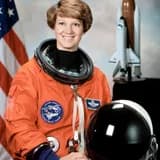
Eileen Collins became the first woman to command a Space Shuttle mission when Columbia launched on STS-93, deploying the Chandra X-Ray Observatory.
On July 23, 1999, Eileen Collins made history as the first woman to command a Space Shuttle mission, leading the crew of Space Shuttle Columbia on mission STS-93. This was an unprecedented achievement in the history of spaceflight, breaking a barrier that had persisted since the earliest days of NASA's human spaceflight program.
The primary objective of STS-93 was the deployment of the Chandra X-Ray Observatory, one of NASA's 'Great Observatories' and, at the time, the heaviest payload ever launched by the Shuttle. Chandra would go on to become one of the most scientifically productive telescopes in history, providing unprecedented insight into black holes, supernovae, and other high-energy astrophysical phenomena.
Collins's ascension to command was the culmination of a career marked by persistent excellence: from her early days overcoming gender barriers in Air Force pilot training, to her groundbreaking role as the first woman to pilot a Shuttle in 1995. As commander, she bore ultimate responsibility for crew safety and mission success, a role of extraordinary responsibility that had never before been entrusted to a woman in the Shuttle program.
Despite a dramatic launch that included a brief electrical short and a hydrogen fuel leak detected during ascent, Collins safely guided Columbia to orbit. Her command of STS-93 remains a landmark achievement in the advancement of women in STEM fields and space exploration, inspiring generations of women to pursue careers in aviation and engineering.