← All women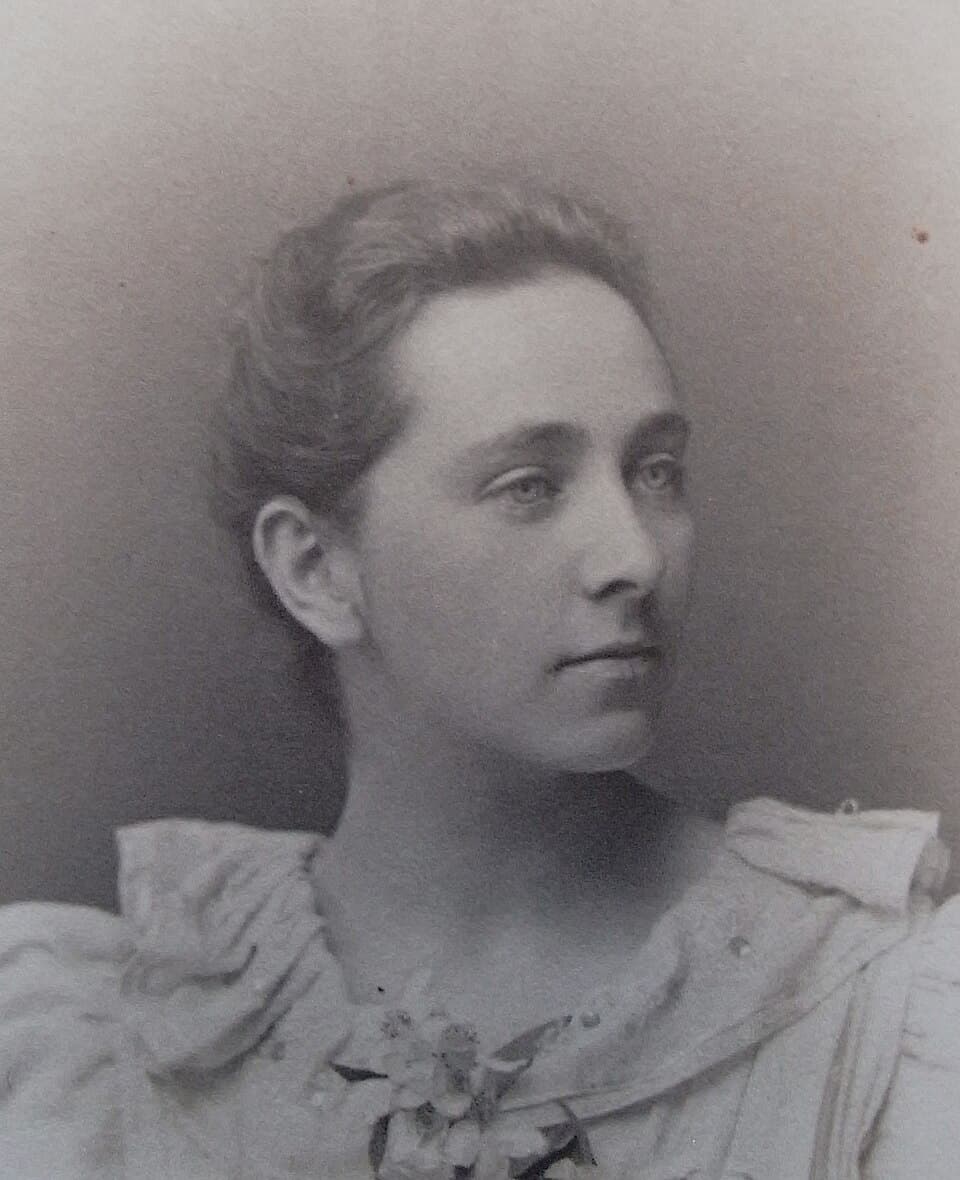
Irish · Science · Medicine
Edith Anne Stoney
January 6, 1869 – June 25, 1938
Early life and background
Edith Anne Stoney (6 January 1869 – 25 June 1938) was an Irish physicist who is widely regarded as the first woman medical physicist.[1][2][4][5][8] She was born at 40 Wellington Road, Ballsbridge, Dublin, into an old‑established Anglo‑Irish scientific family.[1][3][4][5] Her father, George Johnstone Stoney, was an eminent physicist and Fellow of the Royal Society who coined the term electron in 1891 to denote the fundamental unit of electric charge.[1][2][4][5] Her mother, Margaret Sophia Stoney, was both his wife and cousin, and the family environment was steeped in scientific discussion and intellectual pursuits.[1][2][4][5]
Edith was one of five children, growing up in a milieu that valued education and scientific inquiry at a time when women’s opportunities in these fields were severely restricted.[4][5] As a girl she showed marked mathematical ability, and her talents were recognized early.[3][8] Accounts of her life emphasize that she "soon showed herself to be a talented mathematician" and that she benefited from both family encouragement and access to good schooling, which was not universal for girls in nineteenth‑century Ireland and Britain.[3][8]
Her early exposure to physics through her father, together with her own aptitude for mathematics, laid the foundation for a career in which she would apply physical principles to emerging medical technologies. This combination of influences would later prove crucial when X‑rays and radiology became central to military and civilian medicine.
Education
Stoney’s academic promise led her to Newnham College, Cambridge, one of the women’s colleges established to provide higher education to women at the University of Cambridge.[1][2][3][8] She won a scholarship to Newnham, an achievement that both reflected her scholastic excellence and offered her the rare chance, for a woman, to study advanced mathematics at one of Britain’s leading universities.[3][8]
In 1893 she sat Part I of the Mathematical Tripos, the notoriously demanding Cambridge examination in mathematics. She obtained a first‑class result, placing her among the top candidates of her cohort.[3] At that period, however, Cambridge did not award degrees to women; they could sit examinations but were excluded from formal graduation and the conferral of BA and MA degrees until 1948.[3][8] Stoney’s achievement was therefore recognized in examination lists but not honored with an official degree.
Later, Trinity College Dublin awarded her both a BA and an MA, retrospectively acknowledging her Cambridge studies and her academic standard.[3] This arrangement was one of several mechanisms through which women who had completed degree‑level work at institutions that did not yet confer degrees on women were able to obtain formal qualifications. Stoney’s degrees from Trinity helped legitimize her expertise at a time when institutional barriers threatened to undermine women’s professional trajectories.
Career beginnings: engineering and teaching
After completing her studies, Stoney moved into applied work in physics and engineering. She went to Newcastle to work for the engineer and turbine pioneer Charles Algernon Parsons.[3] Parsons is best known for developing the steam turbine and demonstrating it dramatically in the vessel Turbinia. Stoney’s role in his enterprise is described in local historical accounts as that of an "unsung hero of the Turbinia story," indicating that her technical contributions were significant though not widely recorded in mainstream engineering histories.[3]
Her experience with Parsons exposed her to cutting‑edge engineering and the practical application of physics in industry, skills that would later prove vital when dealing with the technical challenges of X‑ray apparatus and power supplies.
Stoney subsequently pursued a career in education. She taught mathematics at Cheltenham Ladies’ College, a leading school for girls that offered an academically rigorous curriculum designed to prepare students for university entrance examinations.[3][9] She then took up a position as a lecturer in physics at the London School of Medicine for Women (often associated with the Royal Free Hospital), where she set up the physics laboratory and designed the physics course for women medical students.[3][8] In this role she not only taught but also built the infrastructure necessary for experimental and applied physics within a medical training environment.
Early medical physics and the Royal Free Hospital X‑ray service
In 1901, Edith and her sister Florence Stoney, who was a physician and radiologist, established a new X‑ray service at London’s Royal Free Hospital.[3][7] The Royal Free was closely linked to the London School of Medicine for Women and played a pivotal role in women’s medical education. The sisters organized the X‑ray department within the hospital’s electricity or radiology section, providing diagnostic imaging services for patients and clinical training for medical students.[3][7]
Radiology was then a very young discipline: X‑rays had been discovered by Wilhelm Röntgen in 1895, and their medical application was still being explored. Many hospitals lacked specialized radiological facilities, and safety protocols were rudimentary. Working with high voltages and unfamiliar radiation, the Stoney sisters contributed to the development of practical techniques and procedures. Edith’s background in physics was crucial for understanding equipment, image formation, and dose considerations, even if the long‑term risks were not yet fully appreciated.[3][7][8]
The Royal Free X‑ray service was notable for being organized and staffed by women in an era when women rarely held senior technical or clinical posts. This initiative helped to integrate physics into hospital practice and supported the emerging identity of medical physics as a distinct area of expertise. It also demonstrated the capacity of women to lead in technologically sophisticated aspects of medicine.
Activism and the British Federation of University Women
Alongside her scientific work, Stoney became active in women’s rights and higher‑education advocacy. She was involved in the women’s suffrage movement, supporting campaigns for women’s political rights.[3] Her most documented organizational role was in the British Federation of University Women (BFUW), later known as the British Federation of Women Graduates.
From 1909 to 1915 Stoney served as the first treasurer of the BFUW.[3] The Federation sought to create a national network of women with university degrees, providing mutual support, opportunities for further study, and a collective voice on issues affecting women’s education and employment. As treasurer, Stoney managed the organization’s finances, helping to secure and administer funds that underpinned its activities and scholarships.
Her leadership position in BFUW reflected the broader pattern of scientifically trained women playing important roles in women’s organizations, using their analytical skills and professionalstanding to support institutional development. This work laid the groundwork for later initiatives, including the establishment of research studentships for women scientists.
World War I: frontline radiology and medical physics
The outbreak of World War I in 1914 transformed Stoney’s career. Together with her sister Florence, she offered her services to the French Red Cross and became involved with the Scottish Women’s Hospitals and related units, which were backed by British women’s organizations and the French Red Cross.[3][6][10] These units provided medical care to Allied troops and civilians, often close to front lines, and were remarkable for their predominantly female staff.
Stoney worked as a radiographer and medical physicist in several theatres of war, including France, Belgium, Serbia, and Macedonia.[5][7][8][10] She applied her physics expertise to improve radiological services under extremely challenging conditions. Sources describe her introducing stereoscopic X‑ray techniques to locate bullets and shrapnel more accurately within the body and pioneering the use of X‑rays in the diagnosis of gas gangrene, a devastating infection that affected wounded soldiers.[4][5][8][10]
Her work required both technical ingenuity and courage. X‑ray apparatus had to be operated in improvised settings, with limited supplies and frequent exposure to danger, including bombardment. According to later assessments, she "was remembered for her considerable bravery and resourcefulness in the face of extreme danger, and her imagination in contributing to clinical care under the most difficult conditions of war."[1][7]
Stoney’s contributions during the war were recognized by several countries. She received the French Croix de Guerre and the Médaille des Épidémies, as well as the Serbian Order of St Sava, in addition to British campaign or victory medals for her service.[3][9][10] These honors testify to the international appreciation of her radiological work and its impact on saving lives and improving outcomes for wounded soldiers.
Post‑war academic career
After the war ended, Stoney returned to Britain and resumed a more settled academic role. She became a lecturer in physics at King’s College for Women, teaching in the department of Home Science and Social Science.[3][7] In this position she continued to bring advanced physics into educational contexts often considered peripheral to the discipline, broadening students’ exposure to scientific thinking.
She remained at King’s College for Women until her retirement in 1925.[7] Her teaching career, spanning Cheltenham Ladies’ College, the London School of Medicine for Women, and King’s College for Women, illustrates a sustained commitment to educating women in science and medicine at different levels—from secondary school to university and professional training.
Awards, honors and professional recognition
Stoney received multiple decorations for her wartime service. The French government awarded her the Croix de Guerre, a medal recognizing acts of bravery in combat or exceptional service in support roles, and the Médaille des Épidémies, which honored contributions to public health in the context of epidemics.[3][9][10] Serbia conferred upon her the Order of St Sava, often given for achievements in education, science, and humanitarian work.[3][9][10] British medals, including the British War Medal and Victory Medal, further acknowledged her service with wartime medical units.[3][6][9]
Beyond these formal honors, Stoney gained recognition within professional and popular circles as a pioneer of medical physics. The English‑language, French‑language, German‑language and Romanian‑language biographies of her life consistently describe her as being regarded as the first woman medical physicist, reflecting both her early appointment in hospital radiology and her leadership in wartime radiological services.[1][2][4][5][8]
After her death, obituaries in Nature, The Lancet, The Woman Engineer, The Times, and Australian newspapers commemorated her contributions to science and medicine.[1][3] This broad spread of tributes across scientific, medical, engineering, and general press underscores the cross‑disciplinary importance attached to her work.
Personal life
Little detailed information is available about Stoney’s private life, but genealogical records and biographical notes indicate that she never married.[9] She devoted much of her time to professional work, education, and organizational commitments. Living and working mainly in Britain, she maintained close ties with her sister Florence, with whom she collaborated extensively in radiology both before and during World War I.[3][10]
Her involvement in organizations such as the British Federation of University Women and the Scottish Women’s Hospitals suggests that she was embedded in networks of women professionals and activists, combining scientific and feminist commitments. This community context formed an important part of her personal life, providing support and shared purpose.
Legacy and historical impact
Edith Anne Stoney’s legacy rests on three interconnected pillars: the development of medical physics, the advancement of women in science and medicine, and her contributions to wartime radiology.
First, she is widely regarded as the first woman medical physicist.[1][2][4][5][8] Her early appointment as a physicist in a medical school, the establishment of the Royal Free Hospital X‑ray service with Florence, and her wartime work in radiological diagnosis and treatment collectively helped define medical physics as a profession that applies physical science to clinical problems. She illustrated the value of rigorous physics training in improving imaging techniques and patient care.
Second, Stoney played a significant role in opening scientific and medical institutions to women. Through her teaching at Cheltenham Ladies’ College, the London School of Medicine for Women, and King’s College for Women, she educated generations of women students, giving them access to knowledge that had previously been restricted.[3][7][8] Her leadership in the British Federation of University Women, particularly as its first treasurer, helped build an organization that would continue to support women graduates and researchers.[3]
Third, her work in World War I radiology demonstrated how applied physics could save lives in extreme circumstances. By introducing stereoscopic X‑ray imaging and advancing the radiological diagnosis of gas gangrene, she improved surgeons’ ability to locate foreign bodies and identify dangerous infections.[4][5][8][10] Her decorations from France and Serbia attest to the international significance of this work.[3][9][10]
Stoney’s impact is also perpetuated through the Johnstone and Florence Stoney Studentship, which she endowed in 1936 through the British Federation of University Women to support women’s research overseas in biological, geological, meteorological, and radiological sciences.[3] This studentship, administered by the Federation’s successor body, continues to enable women scientists to conduct research abroad, embodying her long‑term commitment to women’s participation in scientific inquiry.
Modern historiography has reinforced her status. A 2013 article in the Journal of Medical Biography by M.J. Shields and colleagues examined "Edith (1869–1938) and Florence (1870–1932) Stoney, two Irish sisters and their contribution to radiology during the World War I," providing a detailed scholarly account of their work and influence.[10] Contemporary outreach pieces, such as profiles on women‑in‑science platforms and educational blogs, present her as a role model for women in physics and medical imaging.[7][8]
Later life and death
After retiring from King’s College for Women in 1925, Stoney remained active in scientific and educational circles, particularly through the British Federation of University Women.[3][7] In 1936 she established the Johnstone and Florence Stoney Studentship, ensuring that support for women’s scientific research would continue beyond her lifetime.[3]
Edith Anne Stoney died on 25 June 1938 in Bournemouth, England, aged 69.[1][3][4][5] Obituaries in scientific, medical, and general newspapers commemorated her as a pioneer of medical physics and a courageous wartime worker.[1][3] She was remembered for "her considerable bravery and resourcefulness in the face of extreme danger, and her imagination in contributing to clinical care under the most difficult conditions of war," and for her broader role in building institutions for women graduates.[1][3][7]
Today, Edith Anne Stoney is recognized as a key figure in the history of women in science and in the development of medical physics. Her life illustrates the ways a woman born into a scientific family in nineteenth‑century Ireland could, through talent, education, and determination, help to transform both the practice of medicine and the opportunities available to women scientists.
Dated achievements
7 indexed.
- Jan061869Science
Birth of Edith Anne Stoney
Edith Anne Stoney was born in Ballsbridge, Dublin, Ireland.
View details Edith Anne Stoney - Wikipedia - Jun011893Science
Achieves first in Part I Mathematical Tripos
Stoney achieved a first in Part I Mathematical Tripos at Newnham College, Cambridge.
View details