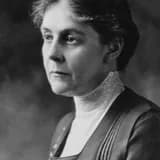
In March 1910, Hamilton became medical director of the pioneering Illinois Occupational Disease Commission survey investigating industrial poisoning.
In March 1910, the state of Illinois, responding to mounting concerns about worker illness and mortality in industrial trades, commissioned a groundbreaking survey of occupational diseases. Alice Hamilton was appointed medical director of this effort, known as the Illinois Survey, which is widely regarded as the first study of its kind in the United States to systematically investigate the connection between industrial labor and disease.
Hamilton and her team of investigators visited factories, smelters, and workshops across Illinois, personally interviewing workers and physicians, and cross-referencing hospital and mortality records to trace patterns of illness—especially lead poisoning—back to specific occupational exposures. This fieldwork required going into dangerous, poorly ventilated workplaces that industry owners often preferred to keep hidden from scrutiny.
The Illinois Survey became a model replicated in other states and, eventually, at the federal level. It represented a foundational moment in the emergence of industrial medicine and occupational epidemiology as legitimate scientific disciplines in the U.S. Hamilton's leadership of this effort, as a woman in a field completely dominated by men, was itself a significant barrier-breaking achievement, and her rigorous, evidence-based methodology set the standard for subsequent public health investigations into workplace hazards.