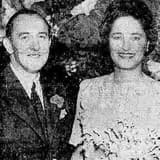
Dorothy Schiff becomes publisher, president, and owner of the New York Post, the first woman to run a major New York City daily newspaper.
By 1942, with the effective date treated here as January 1, 1942 for year‑level precision, Dorothy Schiff had assumed full control as publisher, president, and owner of the New York Post, after the departure of her second husband, George Backer, from the publisher’s role.[5][8][10][16] This transition made her the first woman to run and publish a major New York City daily newspaper and the first female publisher of the Post.[5][8][11]
Schiff’s accession was not ceremonial but operational. She took charge of editorial direction, business strategy, and labor relations, turning the Post into an outspoken liberal tabloid that championed trade unions, social welfare, and civil liberties.[5][7][8] Under her leadership, the paper opposed Senator Joseph McCarthy’s anti‑communist witch hunts, criticized FBI Director J. Edgar Hoover, and challenged urban power broker Robert Moses—sometimes at personal cost, as Moses had been a friend.[5][7]
Her breakthrough came against the backdrop of World War II, when men dominated publishing and newsroom hierarchies. Schiff had to overcome skepticism about a woman’s capacity to manage a big‑city daily, navigate complex union negotiations, and keep the paper solvent in a competitive market.[5][8][11] She relied on a mix of inherited capital, political acumen, and a keen sense of popular taste, shifting the paper to tabloid format and embracing investigative reporting and human‑interest stories.[7][11][16]
Historically, her 1942 takeover is a barrier‑breaking milestone for women in journalism and media management. It opened space for women to be seen not merely as reporters or feature writers but as owners and publishers of influential papers. Schiff held this position for more than three decades, shaping public debate on civil rights, labor, and war, and demonstrating that a woman could successfully steer one of the country’s oldest dailies through periods of political upheaval and economic change.[5][7][8][11]