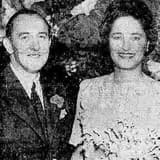
Dorothy Schiff acquires a controlling stake in the New York Evening Post, becoming majority stockholder and key executive of the venerable daily.
In 1939, on or about the beginning of the year, Dorothy Schiff acquired a controlling stake in the New York Evening Post (commonly referred to as the New York Post), becoming its majority stockholder and assuming key executive roles as director, vice‑president, and treasurer.[5][8][10][11] Although the precise purchase date is not documented in available sources, the year marks the turning point when she moved from socialite and reform activist to media proprietor.
Schiff’s decision to buy the struggling, loss‑making Post was both financially risky and politically strategic. Advised by her second husband, George Backer, she used inherited wealth to rescue the nation’s oldest continuously published daily newspaper, originally founded by Alexander Hamilton in 1801.[8][11][14] Her move brought a woman into the ownership circle of a major New York daily at a time when newspaper management was overwhelmingly male.
Historically, 1939 is significant because it began nearly four decades of Schiff’s influence over the Post’s editorial line and business model. As majority owner, she soon steered the paper toward a more populist tabloid format and a distinctly liberal, pro–labor, anti–corruption stance.[5][8][11] This repositioning would later make the Post a leading voice against McCarthyism, a supporter of civil rights, and an early critic of U.S. involvement in Vietnam.[7][16]
Within the broader context of the late 1930s—an era of economic recovery after the Great Depression and rising global tensions—Schiff’s acquisition demonstrates how a female heir used private capital to shape public discourse. Her ownership created the structural conditions that, by 1942, enabled her to become the first woman to publish and run a major New York newspaper.[5][8][10]