← All women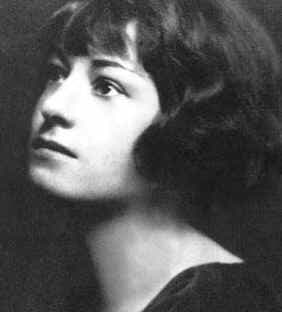
American · Literature · Arts · Activism
Dorothy Parker
August 22, 1893 – June 7, 1967
Early life and background
Dorothy Parker (née Dorothy Rothschild) was born on 22 August 1893 in West End, Long Branch, New Jersey, the youngest of four children of Jacob Henry (J. Henry) Rothschild, a Jewish clothing manufacturer, and Eliza Annie (Elizabeth Annie) Marston, of Scottish background.[2][3][10][12] The family maintained a summer home at the New Jersey shore but primarily lived in New York City, placing Parker between seaside resort culture and Manhattan’s burgeoning urban modernity.
Her mother died when Dorothy was still a child, and her father later remarried; Parker had a strained relationship with her stepmother and would sometimes misrepresent her background, claiming her parents had been killed in the wreck of the Titanic.[3][8][10] These early losses and tensions contributed to the mordant sensibility and distrust of sentimentality that characterize much of her writing.
Parker was educated at a Roman Catholic convent school and later at Miss Dana’s School in Morristown, New Jersey, though she did not finish high school.[3][5][10] She read widely and began writing verse at a young age, drawn to both the musicality of poetry and the possibilities of humor. By her own later account, she saw herself as a plain, disagreeable child with "a yen to write poetry," a self‑description that captures both her self‑deprecation and her fierce attachment to writing as vocation.[4]
Growing up in a partly Jewish, partly gentile household at a time of pronounced antisemitism and rigid gender expectations, Parker inhabited multiple margins: she was neither fully inside nor fully outside the respectable bourgeois world she would later satirize. This liminal status informed her sensitivity to outsiders and to the emotional costs of conforming to social norms—core themes in her later poems and stories.
Career beginnings: Vogue and Vanity Fair
By the mid‑1910s, Parker was living in New York City and determined to make her way as a writer. In 1916 she sold some of her poems to the editor of Vogue, part of the Condé Nast publishing empire, and was soon hired as an editorial assistant.[5][10] At Vogue she wrote captions for fashion photographs and illustrations, honing the concise, ironic style that would become her trademark.
Parker’s first known publication in Vanity Fair, another Condé Nast title, came with the poem “Any Porch” in the issue dated December 1915, a small but crucial milestone that exposed her work to a national audience.[15] In 1917 she began contributing theatre reviews to Vanity Fair, with her first signed review appearing in the March 1917 issue.[15] By 1918 she had been promoted to the magazine’s primary drama critic, replacing the British humorist P. G. Wodehouse.[2][3][10] This appointment made her one of the few women drama critics in New York, giving her an influential platform in a field dominated by men.
At Vanity Fair Parker developed the critical voice that would shape her reputation: dazzlingly witty, impatient with cliché, and willing to pan bad plays regardless of their stars or producers. Her reviews, while popular with readers, angered theatrical interests and sometimes advertisers. In 1920, after conflicts over the severity of her criticism, she was dismissed from the magazine; her final signed theatre review appeared in the issue dated August 1920.[2][15] Her colleagues and close friends Robert Benchley and Robert E. Sherwood resigned in solidarity.[3]
The Algonquin Round Table and New York literary culture
In 1919 Parker joined the founding circle of the Algonquin Round Table, a lunchtime gathering at the Algonquin Hotel that included Benchley, Sherwood, Alexander Woollcott, George S. Kaufman, Edna Ferber, and other writers, actors, and publicists.[2][3][10] The group’s barbed repartee, elaborate practical jokes, and mutual promotion made it famous in its own time and legendary in later accounts.
Parker quickly became one of the Round Table’s most quoted members. Her verbal epigrams—many of which later circulated in slightly altered or possibly apocryphal forms—helped define the public image of the group as the epitome of Jazz Age urban wit. The lunches also functioned as an informal professional network, leading to magazine assignments, theatre collaborations, and publishing contacts.
Participation in the Algonquin circle placed Parker at the heart of New York’s 1920s literary and theatrical culture. Yet she was also ambivalent about its mythology; later in life she downplayed its importance, suggesting that the group was less significant than the myth had made it. Nonetheless, her presence there marked her as one of the rare women fully accepted in a male‑dominated bohemian milieu, a position that afforded opportunity but also exposed her to scrutiny and gossip.
Short fiction, poetry, and The New Yorker
After leaving Vanity Fair, Parker supported herself through freelance work. She wrote book reviews, verse, and occasional pieces for a range of magazines while enduring financial instability and personal turmoil. Her first published short story, “Such a Pretty Little Picture”, appeared in the December 1922 issue of Smart Set, marking an important expansion of her repertoire beyond verse and criticism.[12]
In the mid‑1920s Parker began contributing regularly to The New Yorker, founded in 1924 as a magazine of "metropolitan" life.[1][2][3] She became one of its signature voices, publishing light verse, short fiction, and satirical sketches that captured the rhythms and anxieties of urban modernity. Her column "Constant Reader" offered book reviews that blended sharp assessment with memorable put‑downs.
Alongside her prose and criticism, Parker published several volumes of poetry that cemented her fame. Her debut collection, Enough Rope, appeared in 1926 and became an unexpected bestseller, a rare feat for poetry.[1][2][3] It was followed by Sunset Gun in 1931 and Death and Taxes in 1931–32, later collected in Not So Deep as a Well in 1936.[1][3] These volumes solidified her reputation for compact, technically adept verse that combined light rhymes with themes of romantic disillusionment, self‑loathing, and social satire.
Parker’s short stories, many of them first appearing in magazines before being collected, further expanded her critical recognition. Stories such as “A Telephone Call,” “The Waltz,” and especially “Big Blonde” explored the inner lives of women trapped in unsatisfying relationships, social expectations, or alcoholism. In 1929 she received the O. Henry Award for "Big Blonde," a prize that affirmed her standing as a serious short‑story writer, not just a dispenser of epigrams.[3][10]
Hollywood and screenwriting
In the early 1930s, Parker began to work in Hollywood, attracted by the relatively high pay of screenwriting and sometimes driven by financial need.[2][3] She collaborated with a variety of partners, most notably the screenwriter and actor Alan Campbell, whom she married in 1934 after divorcing her first husband.[3]
Parker and Campbell worked on numerous scripts, often without official credit. Among their best‑known projects was the film A Star Is Born (1937), for which Parker, Campbell, William A. Wellman, and Robert Carson contributed to the story and screenplay.[3] The film, a Hollywood drama about a rising actress and her declining, alcoholic husband, became an enduring classic, remade several times. At the 9th Academy Awards on 2 November 1937, the film received a nomination for Best Writing (Original Story), listing Parker among the credited writers.[3]
Parker’s Hollywood years were professionally productive but personally complicated. She often complained about the constraints of studio work, the extensive rewriting it entailed, and the censorship demands of the Hays Office. Her left‑wing political affiliations, discussed below, also attracted scrutiny during the anti‑communist investigations of the late 1940s and 1950s. Nonetheless, screenwriting royalties from the 1930s and early 1940s helped sustain her financially and extended her cultural reach into popular film.
Political engagement and activism
From the 1930s onward, Parker became increasingly involved in left‑wing politics and anti‑fascist activism.[3][10][15] She supported causes such as the Spanish Republic during the Spanish Civil War, raised funds for anti‑Nazi organizations, and contributed to anti‑fascist publications. She helped found or was associated with several organizations later cited as Communist "fronts" by U.S. authorities.[3]
Parker was also active in civil‑rights issues. In the 1940s she supported the NAACP and anti‑lynching campaigns and spoke out against racial discrimination.[3][10] Her concern for civil rights culminated in the instructions of her will: upon her death, she left her entire literary estate to the Rev. Martin Luther King Jr.; if he predeceased her, the estate was to go to the NAACP.[3][10][15] After King’s assassination in 1968, the estate passed to the NAACP, though the transfer would only be legally clarified decades later.
Her political activities led to surveillance and scrutiny. During the era of the House Un‑American Activities Committee and Hollywood blacklists, Parker’s name appeared in investigative files, and her Hollywood career suffered. She refused to recant her beliefs, and although she never joined the Communist Party according to most biographical accounts, she identified strongly with anti‑fascist and progressive causes. This activism forms a crucial part of her legacy, complicating the image of Parker as merely an apolitical wit.
Personal life and relationships
Parker’s personal life was marked by intense attachments, periodic instability, and struggles with mental health and alcohol. She married Edwin Pond Parker II, a Wall Street stockbroker, in 1917 before he left to serve in World War I.[3][10] The marriage was troubled, exacerbated by his alcoholism and her growing career independence, and they divorced in the 1920s. She kept his surname professionally.
She experienced several affairs and relationships, including a long‑term on‑and‑off relationship with the playwright Charles MacArthur and others in the Algonquin circle.[3] Parker underwent at least one abortion and attempted suicide multiple times, episodes that left deep marks on her and informed the recurring themes of despair and self‑destructiveness in her work.[3][10]
In 1934 she married Alan Campbell, a younger actor and screenwriter.[3] The marriage was tempestuous but professionally fruitful; the pair collaborated on numerous Hollywood scripts. They divorced in 1947, remarried in 1950, and remained together until Campbell’s death by suicide in 1963.[3] Parker had no children.
Alcohol played a significant role in Parker’s life, both socially and destructively. Her heavy drinking contributed to professional difficulties and health problems but was also woven into the bohemian culture she inhabited. Biographers have emphasized that while her self‑deprecating humor about drink and despair became part of her public persona, the underlying depression and loneliness were real and often severe.
Later life and declining fortunes
After World War II, Parker’s prominence in the literary and Hollywood worlds declined. Tastes shifted, and the New Yorker generation of the 1920s was increasingly seen as passé. Her political associations contributed to her marginalization in the conservative climate of the early Cold War. Work became harder to secure, and financial difficulties mounted.
In the 1950s and early 1960s she lived mainly in New York, occasionally writing reviews and essays but producing little new creative work compared to her prolific earlier decades. Despite this, there were moments of renewed attention: in 1956, for example, Life magazine ran a feature on her, emphasizing both her enduring wit and the tragic elements of her life story.[4][15] Friends and younger writers visited her, and she remained a figure of fascination even as her circumstances grew modest.
After the death of Alan Campbell in 1963, Parker lived alone in New York’s Volney Hotel, a residential hotel on the Upper East Side.[3] She continued to drink and struggled with ill health. Yet she also maintained her interest in politics and followed developments in the civil‑rights movement and other causes to which she had long been committed.
Death and posthumous estate
Parker died on 7 June 1967 in New York City, at age seventy‑three, from a heart attack.[2][3][10] She was found in her hotel apartment at the Volney. Her estate turned out to be relatively modest, but her literary rights possessed long‑term value.
In accordance with her will, which left her literary estate to Martin Luther King Jr. and then to the NAACP, the civil‑rights organization eventually assumed control of her copyrights and related income.[3][10][15] The legal transfer was clarified on 20 April 1988, when the Supreme Court of New York County confirmed the NAACP’s control of the estate.[3][15] For years Parker’s cremated remains had an uncertain fate, at one point being kept in an office file cabinet at NAACP headquarters in Baltimore.
In the early twenty‑first century, the Dorothy Parker Society and other advocates worked to secure a more fitting resting place. On 22 August 2021, the 128th anniversary of her birth, her ashes were reinterred at Woodlawn Cemetery in the Bronx, New York, in a ceremony that symbolically reunited her with the city central to her life and myth.[3][15] The gravestone acknowledges her as a writer and civil‑rights supporter, reflecting both sides of her legacy.
Awards, honors, and recognition
During her lifetime, Parker’s most distinguished formal literary honor was the O. Henry Award, which she received in 1929 for her short story “Big Blonde”.[3] The award recognized her skill at blending social observation with psychological depth and confirmed her place in the upper ranks of American short‑story writers of the interwar period.
Her work attracted extensive contemporary attention in the 1920s and 1930s. Enough Rope was a bestseller, an unusual achievement for a poetry collection, and Here Lies, her 1938 collection of stories, received serious critical notice in publications such as The New York Times.[15] In Hollywood, her Academy Award nomination for A Star Is Born in 1937 provided formal recognition of her screenwriting.
Posthumously, Parker’s reputation has grown through biographies, scholarly studies, and reissues of her work. Her life has been the subject of detailed biographies, notably Marion Meade’s Dorothy Parker: What Fresh Hell Is This?, and she has appeared as a character in films and plays about the Algonquin circle. In 2014 she was inducted into the New Jersey Hall of Fame, an honor that acknowledged her as one of the state’s most influential cultural figures.[1][24]
Literary style and major works
Parker’s poetry is characterized by strict forms—rhymed quatrains, sonnets, and light‑verse meters—paired with a modern sensibility. Collections such as Enough Rope (1926), Sunset Gun (1931), and Death and Taxes (1930s) explore disillusionment, romantic failure, and self‑mockery with compressed, memorable phrasing.[1][3] The 1936 omnibus Not So Deep as a Well gathered much of this work, ensuring its continued circulation.
Her short fiction often centers on women whose lives are circumscribed by marriage, social convention, or economic dependence. "Big Blonde" portrays a party girl aging out of desirability, trapped in alcohol and despair. Other stories dissect casual cruelties in conversation, the emptiness of certain social rituals, and the small humiliations endured by women in a patriarchal culture. Parker’s narrative voice oscillates between ironic distance and sudden empathy, a combination that has kept the stories relevant to feminist critics and general readers alike.
As a critic, Parker wrote with a distinctive blend of conversational tone and sharp judgment. Her "Constant Reader" book reviews for The New Yorker became famous for their quotable barbs—one review of A. A. Milne famously concluded, "And it is that word ‘hummy,’ my darlings, that marks the first place in The House at Pooh Corner at which Tonstant Weader Fwowed up." Although such lines contributed to her reputation as a mere quipster, her reviews also demonstrated serious engagement with contemporary literature.
In screenwriting, Parker’s contributions ranged from uncredited polishing to major involvement in projects like A Star Is Born. While studio collaboration and rewriting make it difficult to isolate her exact contributions, critics have noted her likely role in sharpening dialogue and deepening character psychology, especially in scenes of marital strain and alcoholic decline that echo her short fiction.
Legacy and historical impact
Dorothy Parker occupies a distinctive place in twentieth‑century American culture as both an emblem of Jazz Age wit and a serious chronicler of emotional damage and social constraint. She helped define the voice of magazines such as Vanity Fair and The New Yorker, bringing to mass audiences a style of humorous writing that was at once vernacular, self‑aware, and technically controlled.
For women’s history, Parker is significant as one of the relatively few women who achieved fame as a critic, satirist, and public wit in the 1910s–1930s. She navigated male‑dominated editorial offices, the Algonquin Round Table, and Hollywood writers’ rooms while maintaining a distinctive voice that foregrounded women’s experiences of love, work, and marginalization. Her stories, in particular, have been read as early, if ambivalent, feminist texts that lay bare the costs of romantic and social scripts imposed on women.
Parker’s political activism and bequest to the NAACP have further reshaped her legacy. The fact that a prominent white woman writer of her era chose to leave her estate to a Black civil‑rights organization underscores the depth of her commitment to racial justice and has drawn scholarly attention to the intersection of her literary and political lives.[3][10][15] The 1988 legal affirmation of the NAACP’s control of her estate and the 2021 reinterment of her ashes at Woodlawn Cemetery are now part of this ongoing historical narrative.
Her reputation has undergone cycles of dismissal and revival: once seen primarily as a maker of clever one‑liners, she is now more widely recognized for the emotional complexity of her work and for her role in shaping a specifically female, urban, modernist sensibility in American letters. Anthologies, academic courses, and popular quotations continue to keep her in circulation, and her influence can be traced in later generations of women humorists and columnists.
Assessment
In sum, Dorothy Parker was a poet, short‑story writer, critic, screenwriter, and political activist whose life spanned key decades of American modernity. Her writing fused elegance of form with a piercing awareness of pain, hypocrisy, and the small indignities of everyday life. The contradictions of her career—between public laughter and private despair, commercial success and political radicalism, epigrammatic brevity and deep feeling—continue to fascinate readers, scholars, and biographers.
Her story illustrates both the opportunities and constraints facing a talented woman writer in the early to mid‑twentieth century: the doors that magazines and Hollywood could open, the costs of nonconformity, and the ways in which wit itself could be both a defense and a form of critique. That her estate today supports civil‑rights work, and that her remains only recently found a permanent resting place, suggests that the questions she raised about justice, identity, and survival remain unresolved, making her work enduringly relevant.
Dated achievements
16 indexed.
- Aug221893Literature
Birth in Long Branch, New Jersey
Dorothy Rothschild was born in Long Branch, New Jersey, in 1893.
View details Dorothy Parker - Poetry Foundation - Dec011915Literature
First known Vanity Fair publication, "Any Porch"
Parker's poem "Any Porch" appeared in Vanity Fair, December 1915.
View details