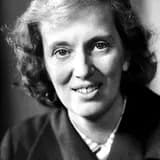
The Royal Swedish Academy of Sciences announced Hodgkin as sole winner of the 1964 Nobel Prize in Chemistry.
On 20 October 1964, the Royal Swedish Academy of Sciences announced that Dorothy Crowfoot Hodgkin had been awarded the Nobel Prize in Chemistry for her determinations, using X-ray techniques, of the structures of important biochemical substances, including penicillin and vitamin B12.
This announcement made her the first British woman ever to win a Nobel Prize in any scientific category, and only the third woman in history to win the Chemistry Prize, following Marie Curie (1911) and her daughter Irène Joliot-Curie (1935).
The award recognized three decades of pioneering structural biology research conducted largely at Oxford, often under difficult conditions including wartime shortages, limited institutional resources for women scientists, and Hodgkin's own increasingly severe rheumatoid arthritis, which had begun afflicting her in her twenties and progressively deformed her hands—the very hands she relied upon for delicate crystallographic work.
News of the prize was met with widespread public attention in Britain, with some contemporary newspaper headlines reportedly focusing more on her appearance and domestic life than her scientific achievements, reflecting the era's persistent gender biases even in celebrating a woman's historic scientific triumph. Nonetheless, the announcement stands as a landmark moment in the history of women in science, inspiring generations of female scientists worldwide and validating decades of painstaking, groundbreaking crystallographic research.