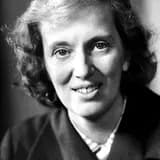
Dorothy Hodgkin received the Nobel Prize in Chemistry at the award ceremony in Stockholm for her X-ray determinations of important biochemical structures.
On 29 October 1964, Dorothy Crowfoot Hodgkin was formally awarded the Nobel Prize in Chemistry at the Nobel Prize Award Ceremony in Stockholm, Sweden. The Royal Swedish Academy of Sciences recognized her "determinations by X-ray techniques of the structures of important biochemical substances," honoring more than three decades of pioneering crystallographic work, including her structural analyses of cholesteryl iodide, penicillin, and vitamin B12.
The ceremony represented the pinnacle of international scientific recognition for a woman who had worked for years in a field dominated by men, often facing skepticism about the practical value of X-ray crystallography for biological molecules. Hodgkin's meticulous, patient methodology — relying on years of diffraction data collection and, increasingly, early computing — had proven capable of resolving molecular structures no other technique could match.
Her Nobel Prize not only validated her personal scientific achievements but also elevated the entire discipline of protein and biomolecular crystallography, inspiring a new generation of structural biologists. Media coverage of the ceremony, including newspaper headlines noting a woman winning the prize, highlighted both her scientific accomplishment and the rarity of such recognition for women in science during this era. The award remains one of the most significant moments in the history of women in science.