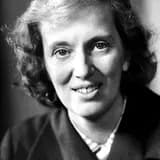
Dorothy Hodgkin died on 29 July 1994 in Shipston-on-Stour, Warwickshire, England, at the age of 84.
Dorothy Crowfoot Hodgkin died on 29 July 1994 in Shipston-on-Stour, Warwickshire, England, at the age of 84. She had continued to work, teach, and champion scientific causes — including international scientific cooperation and nuclear disarmament — well into her later years, despite suffering from severe rheumatoid arthritis for most of her adult life, a condition that progressively affected her hands yet never stopped her from working at the laboratory bench and diffractometer.
Her death marked the end of a career that had fundamentally transformed the field of X-ray crystallography and structural biology. Hodgkin's meticulous determinations of the structures of cholesteryl iodide, penicillin, vitamin B12, and insulin not only solved major scientific puzzles of her time but also established methodologies that continue to underpin modern structural biology, drug design, and biochemistry.
She was remembered not only as a brilliant scientist but as a generous mentor — she supervised and inspired numerous students, including future UK Prime Minister Margaret Thatcher, who studied chemistry under her at Oxford. Hodgkin was also a committed peace activist and advocate for scientists from developing countries. Her legacy endures through the Dorothy Hodgkin Fellowship of the Royal Society, awards and buildings named in her honor, and her enduring status as an inspiration to women in science worldwide.