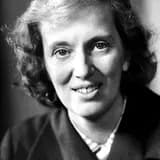
Hodgkin became the third woman to win the Nobel Prize in Chemistry and remains the only British woman ever awarded a Nobel Prize in a scientific field.
When Dorothy Hodgkin received the 1964 Nobel Prize in Chemistry, she became only the third woman in history to win a Nobel Prize in Chemistry, following Marie Curie (1911) and her daughter Irène Joliot-Curie (1935). More remarkably, Hodgkin remains, to this day, the only British woman to have ever been awarded a Nobel Prize in any scientific discipline — physics, chemistry, or physiology/medicine.
This singular distinction underscores both her extraordinary scientific achievements and the profound structural barriers that women in science faced throughout the twentieth century in gaining access to laboratories, funding, professorships, and recognition. Hodgkin achieved her breakthroughs while also raising three children and navigating a scientific establishment that offered few precedents or support structures for women pursuing high-level research careers.
Her Nobel win was celebrated widely, though British tabloids of the time controversially focused on her domestic life and appearance rather than her scientific contributions — a reflection of the era's attitudes toward women scientists. Nevertheless, Hodgkin's achievement has since become a touchstone in the history of women in STEM fields, frequently cited in efforts to encourage girls and women into scientific careers. Her enduring status as Britain's only female science laureate highlights both her personal brilliance and the ongoing work needed to achieve gender equity in scientific recognition.