← All women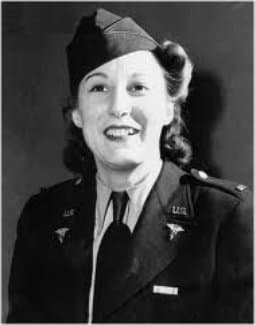
American · Medicine · Activism
Cordelia E Cook
March 17, 1919 – June 19, 1996
Early Life and Background
Cordelia Elizabeth Cook, widely known by her nickname “Betty”, was born on 17 March 1919 in Fort Thomas, Campbell County, Kentucky.[1][4] She was the middle child of five siblings in a family strongly connected to local public service. Her father, Louis Cook, served as chief of police in Fort Thomas, a role that placed law enforcement and civic responsibility at the center of the family’s daily life.[1][5] Her mother is recorded as Navada Cook in genealogical sources, and the household included brothers Louis and Henry and sisters Navada and Catherine.[5]
Growing up in a small, closely knit community on the Ohio River across from Cincinnati, Cordelia experienced the economic and social pressures of the interwar years and the Great Depression. The public service orientation of her father’s work, combined with the expectations traditionally placed on girls and young women in caring roles, helped influence her decision to pursue nursing. Her environment also exposed her to the realities of injury, illness, and social need in a town where the police and local medical practitioners often worked in tandem.[1]
Cook attended Highlands High School in Fort Thomas, where she completed her secondary education.[1] Accounts do not describe extensive extracurricular activities or scholastic distinctions, but her later career suggests strong aptitude in science and practical medicine. Upon graduation, she looked beyond Fort Thomas for professional training, following a path that was becoming increasingly available to women as nursing schools expanded in the 1930s.
Nursing Education and Civilian Career Beginnings
After high school, Cook enrolled in the Christ Hospital School of Nursing in Cincinnati, Ohio.[1][4] Christ Hospital, located just across the river from her hometown, functioned as a major regional medical center and training institution for nurses. The school’s curriculum at the time emphasized rigorous clinical work alongside formal coursework in anatomy, physiology, pharmacology, and surgical nursing.
Cook graduated from Christ Hospital’s nursing program in 1940, earning her qualification as a registered nurse.[1][4] Sources do not give an exact graduation date, but they agree on the year. Following graduation, she worked for approximately one year as a staff nurse at The Christ Hospital in Cincinnati.[1] During this period she gained practical experience in surgery and inpatient care, skills that would later prove crucial in the high-pressure environment of field hospitals.
The late 1930s and early 1940s saw nursing become one of the few professional fields in which women could both receive formal training and assume positions of real responsibility. Cook’s decision to pursue nursing aligned with broader national trends that were expanding women’s roles in hospital medicine and public health. Her clinical experience in Cincinnati brought her into contact with complex cases and advanced surgical practice, positioning her for eventual service in military medicine.
Enlistment in the Army Nurse Corps and Training
Around 1941, as the global conflict intensified and the United States moved closer to entry into World War II, Cook enlisted in the United States Army Nurse Corps.[1][3][4] The precise enlistment date is not documented in available sources, but narratives agree that she left civilian nursing after roughly one year at Christ Hospital to join the Army. She entered as a surgical nurse, bringing her specialized skills in operating-room and post-operative care to a military context.
Following enlistment, Cook trained at various U.S. Army medical posts, where she underwent instruction in battlefield triage, field-hospital organization, and care under combat conditions.[1] The Army Nurse Corps, which had been relatively small before the war, expanded rapidly in anticipation of mass casualties. As part of this expansion, nurses were taught to handle trauma wounds, shock, infectious disease management, and the logistics of mobile hospitals.
Cook quickly rose through the commissioned ranks, being promoted to first lieutenant during her wartime service.[1][3] Later accounts indicate that she eventually attained the rank of lieutenant colonel, though the timing of that promotion is not specified.[1] Her rise reflected both her professional competence and the Army’s need to place experienced nurses in leadership roles within field-hospital teams.
Deployment to North Africa and Sicily
Cook’s initial overseas assignment during World War II was to the North African Theater of Operations.[1][4] After the Allied landings in North Africa (Operation Torch, 1942) and subsequent campaigns against Axis forces, the U.S. Army established large medical infrastructures to treat those wounded in desert fighting. Cook served as a surgical nurse in this environment, working close to the front lines under harsh climatic conditions.
In 1943, she took part in medical operations during the Allied invasion of Sicily, another critical phase of the Mediterranean campaign.[4] Accounts emphasize that she worked "close to the front lines" in support of units whose bravery was officially recognized. Her unit continued to follow the fighting as Allied forces moved from North Africa into Sicily and then toward mainland Italy.[4]
These deployments exposed Cook to the logistical and clinical challenges of wartime medicine in mobile operations. Field hospitals had to be rapidly established, often in improvised locations, with limited supplies and under threat of enemy air attack. For nurses like Cook, the work required both technical skill and considerable psychological resilience.
Service in Italy and the Presenzano Field Hospital
By late 1943, Cook was serving as a surgical nurse in a U.S. Army field hospital near Presenzano, Italy, positioned close to the front lines of the Italian campaign.[2][7] Official accounts and later historical summaries specify that her meritorious service in this sector extended from November 1943 through January 1944, a period that would later be central to her Bronze Star Medal citation.[2][7]
During this interval, the Italian campaign was characterized by intense fighting around the Rapido River, Cassino, and the approaches to Rome. Field hospitals near Presenzano handled a continuous flow of casualties, including complex trauma cases. A local valor citation notes that newspaper reports credited Cook with taking charge of approximately 340 cases during this period.[7] Her responsibilities included assisting in surgeries, managing post-operative recovery, and triaging new arrivals under conditions of stress and scarcity.
The field hospital itself was within range of German artillery and air attack. Medical personnel worked under blackout conditions and often had to adapt to damaged infrastructure and intermittent supply lines. Cook’s performance during these months was later described as "outstanding," and formed the basis for her recognition for "meritorious service in direct support of Italian combat operations."[2]
Combat Injury and the Purple Heart
In early 1944, while still serving in the Presenzano sector, the field hospital where Cook worked was bombed by German forces.[2][4] Shrapnel from the attack struck her right arm, wounding her while she was engaged in caring for the wounded. Despite the injury, contemporary accounts emphasize that she continued to nurse others back to health, refusing to leave her post.[2]
As a result of this combat-related wound, Cook was awarded the Purple Heart, the U.S. decoration given to those who are wounded or killed as a direct consequence of enemy action.[3][4] Very few women in the Army Nurse Corps received the Purple Heart during World War II, making her case notable both for its rarity and for its circumstances in a front-line medical facility.
The bombing of her hospital and her determination to continue working highlighted the dangers faced by medical personnel in modern warfare. Unlike the more distant, rear-area hospitals of earlier conflicts, the field hospitals of World War II often operated within artillery and air-attack range. Cook’s injury demonstrated that nurses, many of them women, were sharing in the risks traditionally associated with combat troops.
Bronze Star Medal and Barrier-Breaking Firsts
For her work in Italy between November 1943 and January 1944, Cook received the Bronze Star Medal for "meritorious service in direct support of Italian combat operations."[2][7] Sources agree that she was the first woman in the U.S. Army to receive the Bronze Star Medal.[1][3][6] The award recognized her sustained performance under fire, including her management of hundreds of surgical cases and her conduct during the bombing of her hospital.
Following her combat injury, Cook’s Purple Heart made her the first woman to receive both the Bronze Star Medal and the Purple Heart.[1][4] A broader formulation, reflected in local historical materials and later commentary, describes her as the first American woman to receive two World War II military decorations, underscoring the unusual combination of honors at a time when few women received even one combat-zone decoration.[2][7]
These "firsts" have been consistently noted in women’s-history contexts and military histories. The List of American women’s firsts includes Cook as the first woman to receive both the Bronze Star and the Purple Heart.[4] Popular and educational articles on World War II nursing also highlight her as an example of a highly decorated female service member whose recognition challenged gendered expectations of valor.[6]
The Bronze Star Medal itself, established in 1944, was intended to honor heroic or meritorious achievement in a combat zone. That a woman nurse was selected as an early recipient signaled institutional acknowledgment that nursing work under fire could constitute meritorious service comparable to that of combat troops. Cook’s decoration thus had symbolic importance far beyond her personal record.
Later Wartime Service and Rank
During World War II, Cook’s responsibilities and rank grew. She initially served as a first lieutenant in the Army Nurse Corps.[1][3] Later accounts, including her Wikipedia entry, note that she eventually became a lieutenant colonel.[1] While detailed promotion dates are not provided, this progression reflects the Army’s recognition of her experience and leadership.
Her unit, identified in some sources as the 11th Field Hospital, continued to support operations in the Mediterranean theater.[5] Cook’s sustained performance during and after her injury contributed to the effectiveness of the medical services available to front-line troops.
Awards, Honors, and Decorations
Cook’s known military decorations include:
- Bronze Star Medal for meritorious service in Italy (1943–1944).[1][2][7]
- Purple Heart for her combat wound at Presenzano.[3][4][5]
- Good Conduct Medal, recognizing exemplary behavior, efficiency, and fidelity in active federal military service.[5]
- American Campaign Medal, awarded for service in the American Theater during World War II.[5]
- European-African-Middle Eastern Campaign Medal, reflecting her service in North Africa, Sicily, and Italy.[5]
- World War II Victory Medal, given to all eligible service members following the Allied victory.[5]
Beyond formal military decorations, Cook has been honored posthumously in various ways. The city of Upper Arlington, Ohio, includes her in its Valor program, a local initiative recognizing residents who performed distinguished military service.[2] Online articles and women’s-history forums recount her story as an exemplar of courage and barrier-breaking achievement.[4][6]
Personal Life and Marriage
Outside of her professional identity as Cordelia E. Cook, she was also known as Cordelia E. Fillmore after marriage.[3] Encyclopedia.com and other sources record that she married Harold E. (or L.) Fillmore, a U.S. Army captain.[1][2][3] Wikipedia specifies that the marriage took place at Camp Carson, Colorado, in March 1943, and that the couple had met earlier in Fort Thomas, Kentucky.[1] A local Upper Arlington valor page appears to contain a conflicting date, listing March 27, 1919, which is inconsistent with her birth year and is treated by researchers as a typographical error.[2]
Harold Fillmore had served in the U.S. Army and later worked in civilian life in the Columbus/Upper Arlington area.[2][6] The couple had three children—one daughter and two sons—according to multiple biographical and local sources.[1][2][6] As a civilian, Cook was widely known by her nickname "Betty" and the married name Betty Fillmore.[2][6]
Balancing family life with a demanding nursing career, she exemplified the postwar experience of many women veterans who transitioned from intense wartime service to domestic responsibilities and professional work in growing American suburbs.
Post–World War II Career
After World War II, Cook returned to the Midwest and resumed civilian nursing. She settled in the Columbus, Ohio, area, specifically in or near Upper Arlington, a suburban community where she would spend much of the rest of her life.[1][2][6]
She worked for nearly three decades as a registered nurse at Doctors Hospital North, a local institution serving the growing population of northern Columbus and surrounding communities.[1][2][6] Sources estimate her tenure at about 28 years, though no exact start date is given.[1][2] In this role, she moved from the high-intensity environment of combat medicine to the steadier, but still demanding, world of community hospital care.
Colleagues and local accounts describe her as a dedicated professional who did not seek publicity for her wartime honors. Instead, she focused on providing high-quality care to civilian patients, bringing the skills and discipline honed in wartime medicine to peacetime practice. Her long career in Columbus/Upper Arlington made her a familiar figure in local health care and reinforced her legacy as both a war heroine and a lifelong nurse.
Legacy and Historical Impact
Cordelia E. Cook’s legacy rests on both her barrier-breaking military record and her extended contribution to nursing. Historically, she is most often cited for three related "firsts":
- First woman in the U.S. Army to receive the Bronze Star Medal.[1][3][6]
- First woman to receive both the Bronze Star Medal and the Purple Heart.[1][4]
- First American woman recognized with two World War II military decorations (Bronze Star and Purple Heart).[2][7]
These distinctions have placed her in lists of American women’s firsts and in discussions of women’s integration into military honors systems.[4] Her case demonstrates how institutional recognition of women’s service expanded under the pressures of global war, particularly in fields like combat nursing that were essential to military effectiveness but long undervalued.
In women’s-history scholarship, Cook serves as a representative figure showing that women’s wartime experiences included direct exposure to combat zones and serious personal risk. Her injury and Purple Heart highlight the vulnerability of medical personnel on or near the front lines. Her Bronze Star Medal for meritorious service underscores that women’s contributions could meet the criteria for high-level decorations traditionally associated with men.
Popular and educational articles about Cook emphasize her courage and professionalism, but also note the relative obscurity into which she fell after the war, a pattern common among women veterans whose achievements were not widely publicized.[4][6] Renewed interest in women’s military history has brought her story back into circulation, with local valor programs, online essays, and social-media groups dedicated to women’s history recounting her service.
Later Life and Death
In her later years, Cook lived as Betty Fillmore in the Upper Arlington area, continuing her work in nursing and family life.[2][6] She eventually retired from Doctors Hospital North after nearly three decades of service, though the exact retirement date is not documented.
On 19 June 1996, Cook died at age 77 in the Columbus/Upper Arlington region of Ohio.[1][2][3] Encyclopedia.com lists her place of death as Columbus, while local sources and a city valor program refer to Upper Arlington, reflecting the close geographic and administrative relationship between the two.[2][3] A local account notes that she died at Arlington Court Nursing Home in north Arlington, survived by her husband, daughter, and two sons.[2]
After her death, she was buried in Evergreen Cemetery in Southgate, Campbell County, Kentucky, returning to the vicinity of her birthplace.[1][5] This final resting place symbolizes a full-circle journey from a small Kentucky town to global war zones and back to her home region.
Today, Cordelia E. Cook is remembered as a pioneering combat nurse whose bravery and professional excellence helped expand recognition of women’s roles in military medicine. Her story is preserved in encyclopedic entries, local government valor programs, military-history summaries, and dedicated women’s-history forums, ensuring that her contributions remain part of the broader narrative of twentieth-century women’s history.[1][2][3][4][6]
Dated achievements
8 indexed.
- Mar171919Medicine
Birth of Cordelia Elizabeth Cook
Cordelia Elizabeth "Betty" Cook was born in Fort Thomas, Campbell County, Kentucky, the middle child of five siblings.
View details USGenWeb Campbell County KY - Cordelia Cook - Nov011943Medicine
Begins meritorious front-line nursing service in Presenzano, Italy
Cook began a period of distinguished front-line nursing service in the Presenzano sector of Italy, serving in a U.S. Army field hospital near active combat.