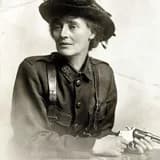
On 2 April 1919, Markievicz was appointed Secretary/Minister for Labour in the First Dáil government, becoming the first female cabinet minister in Irish and Western European history.
On 2 April 1919, Constance Markievicz was appointed Secretary for Labour (Minister for Labour) in the revolutionary government of the Irish Republic, formed under the First Dáil. This appointment made her the first woman ever to hold a cabinet-level ministerial position in Ireland, and the first woman minister anywhere in Western Europe, predating comparable appointments in Britain and most European nations by years, in some cases decades.
In her ministerial role, Markievicz worked on labour policy amid the tumultuous backdrop of the Irish War of Independence, when the Dáil government operated as an underground counter-state challenging British administration. Her portfolio dealt with issues affecting Irish workers at a time of significant social and economic upheaval.
This achievement was extraordinary given the pervasive exclusion of women from political leadership across Europe at the time; most Western democracies would not appoint a female cabinet minister until decades later. Markievicz held the position until January 1922, resigning along with other anti-Treaty ministers over the Anglo-Irish Treaty. Her tenure remains a landmark reference point in the history of women's political representation, frequently cited in discussions of gender and government leadership in the twentieth century.