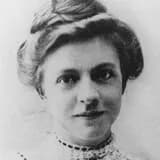
Clara Maass died of yellow fever on August 24, 1901, in Havana, Cuba, at age 25 — the only woman and only American to die in the 1900-01 yellow fever experiments.
Clara Maass died on August 24, 1901, at Las Animas Hospital in Havana, Cuba, succumbing to the severe yellow fever infection triggered by her final experimental mosquito inoculation just six days earlier. She was only twenty-five years old.
Her death made her the only woman and the only American to die during the 1900–1901 U.S. Army Yellow Fever Commission experiments in Havana, a fact that generated considerable public attention and controversy both in Cuba and the United States. Newspapers of the era published critical accounts questioning the ethics of allowing — and paying — volunteers, particularly women, to submit to potentially fatal disease exposure for the sake of scientific research.
The public outcry following her death is widely credited with contributing to the discontinuation of human experimentation using paid volunteers in the yellow fever research program shortly thereafter. Her sacrifice, however, was not in vain: the confirmation that mosquitoes transmitted yellow fever, cemented in part through cases like hers, directly enabled subsequent public health measures — including mosquito-control sanitation campaigns led by Dr. William Gorgas — that dramatically reduced yellow fever transmission in Cuba and later made possible the construction of the Panama Canal by controlling disease among the workforce.
Clara Maass was buried in Havana before her remains were later returned to New Jersey, where she is buried in Fairmount Cemetery in Newark. Her death remains one of the most poignant examples in medical history of a caregiver giving her life in the direct pursuit of scientific knowledge meant to save others.