← All women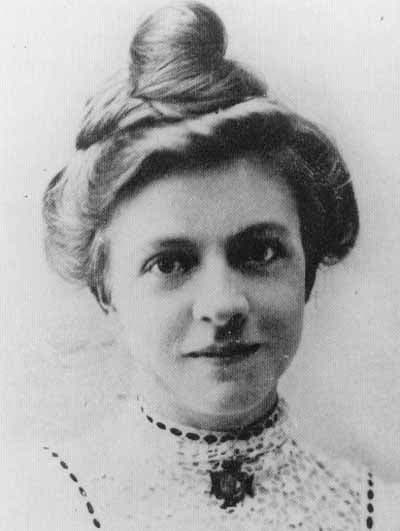
American · Medicine · Activism
Clara Maass
June 28, 1876 – August 24, 1901
Early Life and Background
Clara Louise Maass was born on June 28, 1876, in East Orange, New Jersey, into a poor German immigrant family.[1][2][6][8][10] Her parents, Hedwig and Robert Maass, had recently arrived from Germany and struggled economically; her father worked a seasonal, low‑paid job in a hat factory in nearby Orange.[1][3][10] Clara was the eldest of nine children, bearing significant responsibility for helping to raise and support her younger siblings.[8][10]
The family lived in tenements, and Clara’s childhood was marked by economic hardship.[5][8][10] From an early age she contributed to the household by working as a “mother’s helper,” a domestic position for which she received room and board and the opportunity to attend school but no wages.[5][6][8] Around age fifteen, financial pressures forced her to leave formal schooling and seek paid work, continuing in domestic service to support her family.[8][10]
These formative experiences instilled in Maass a strong sense of duty, self‑discipline, and empathy. Biographical accounts emphasize that she "learned quickly to put others’ needs before her own," a disposition that would later underpin her approach to nursing and her extraordinary willingness to volunteer for dangerous medical experiments.[6][10] Her Lutheran upbringing also played a role, grounding her in a religious ethic of service and sacrifice, though specific details of church life are sparsely documented.[5]
Entry into Nursing and Professional Training
In 1893, at about age seventeen, Maass entered the training school for nurses at the Newark German Hospital (later Newark German Hospital Training School for Nurses) in Newark, New Jersey.[2][8][9] The school, sometimes referred to as the Christina Trefz Training School, was part of a broader movement to professionalize nursing in the United States following models pioneered by Florence Nightingale and others.[8][9][10]
Maass completed the two‑year program and, on June 19, 1895, graduated as one of the hospital’s first nine trained nurses.[8] This achievement was remarkable for a young woman from a working‑class immigrant background, at a time when access to professional education for women was limited and largely restricted to those of greater means.[2][8][10] Her success reflected both personal determination and the growing openness of hospitals to women as skilled medical workers.
Following graduation, Maass remained at Newark German Hospital, where she quickly advanced. By 1898, at age twenty‑one, she was named head nurse, a position that placed her in charge of other nursing staff and patient care on the wards.[2][8][9] This role offered significant administrative and clinical responsibility, further developing her expertise in treating infectious diseases and managing hospital operations.
Spanish–American War Service
The outbreak of the Spanish–American War in April 1898 created an urgent need for nurses to care for American soldiers. Shortly afterward, Maass volunteered to serve as a contract nurse with the U.S. Army Medical Department and reported for duty on May 1, 1898.[1][2][9] Her decision to join the Army at age twenty‑one extended her nursing beyond civilian hospital walls into military settings.
During her first term of service, Maass worked in army camps in Florida, Georgia, and Cuba, attached to the Seventh U.S. Army Corps.[2][7][9] Contrary to popular images of battlefield nursing, the main challenges she faced involved infectious diseases rather than traumatic wounds. Soldiers suffered and died primarily from illnesses such as typhoid fever, malaria, dysentery, dengue, and yellow fever, all exacerbated by crowded conditions and inadequate sanitation.[2][7][9]
Maass became adept at recognizing and managing these diseases, particularly yellow fever, which caused devastating epidemics in tropical and subtropical regions. Her wartime service not only broadened her clinical experience but also exposed her to the human cost of uncontrolled infectious disease. Biographers note that this exposure strongly influenced her later interest in yellow fever research and her willingness to participate in experimental trials aimed at understanding and preventing the disease.[2][7][9]
After her initial contract ended, Maass briefly returned to civilian work. She volunteered again in 1900 and was reportedly sent first to the Philippines and then back to Cuba, where yellow fever remained endemic.[2] These repeated deployments underscored her commitment to military nursing and positioned her close to emerging scientific efforts to control the disease.
Yellow Fever Research and the Reed Commission
By 1900, scientific focus on yellow fever had intensified. Cuban physician Carlos Juan Finlay had long hypothesized that the disease was transmitted by mosquitoes, but his theory remained controversial.[11] The U.S. Army established the Yellow Fever Commission, led by Major Walter Reed, to investigate the etiology of the disease in Havana.
The commission’s experiments represented some of the earliest systematic uses of written informed consent in human medical research. Volunteers were informed of the risks, signed consent forms, and received monetary compensation, often $100 in U.S. gold.[11] At the same time, the trials involved deliberate exposure to a highly lethal virus, raising moral questions that would reverberate through later debates on research ethics.
Maass, experienced in caring for yellow fever patients and stationed in Cuba, became involved in this work. On March 24, 1900, she signed an informed‑consent document in Havana and agreed to participate in Reed’s mosquito‑vector experiments by allowing herself to be bitten by mosquitoes known to transmit yellow fever.[8][11] Initially, these and related trials, conducted at specialized research camps, focused on establishing that mosquito bites could transmit the disease and that contaminated clothing or bedding (fomites) played little or no role.
Reed’s commission ultimately confirmed Finlay’s hypothesis, showing conclusively that Aedes mosquitoes were responsible for transmitting yellow fever.[4][11] This breakthrough enabled public health authorities to design targeted mosquito‑control measures—improving sanitation, eliminating breeding sites, and implementing screening—that dramatically reduced yellow fever incidence in Havana and later in other regions.[4]
Later Experiments: Gorgas, Guitéras, and Immunity Trials
Following the commission’s success in establishing mosquito transmission, further experiments were undertaken to investigate questions of immunity and vaccination. At Las Animas Hospital in Havana, Maass became involved in trials conducted by William C. Gorgas, chief sanitary officer, and John Guitéras, a noted physician.[2][4][6]
According to historical accounts, Maass was inoculated for the first time with yellow fever in March 1901, developing only a mild case and recovering.[4][6] This led researchers to consider whether a light infection might confer protective immunity against more severe illness, an idea consistent with contemporary thinking about many infectious diseases.
In June 1901, Maass again allowed herself to be bitten by infected mosquitoes in an immunity trial, and in mid‑August she volunteered for yet another inoculation.[6] One source notes that she was infected after a trial on August 14, 1901, falling gravely ill ten days later.[6] Other accounts emphasize the date of symptom onset, August 18, 1901
These later experiments aimed to determine whether controlled exposure to the virus might safely induce immunity, but Maass’s case demonstrated the opposite. Her earlier mild illness did not protect her from severe disease; instead, the August inoculation exposed her to a more virulent strain that led to catastrophic systemic failure.[2][4][6] On August 18, 1901, Maass’s condition worsened sharply, with symptoms consistent with severe yellow fever.[3][6] Despite receiving what was then regarded as the best available care, she deteriorated over the ensuing days. On August 24, 1901, she died at Las Animas Hospital in Havana, at the age of twenty‑five.[1][2][3] Maass’s death had immediate repercussions. She was the only woman and the only American to die in the 1900–1901 yellow fever experiments.[2][11] Along with two Spanish volunteers who also succumbed to the disease, her case triggered public outcry and intense scrutiny of the ethical basis of such trials. Historical analyses emphasize that, despite Reed’s pioneering use of written consent, volunteers were still placed at extreme risk in an era when effective treatment did not exist.[11] The deaths of Maass and others led to the immediate cessation of human yellow fever experiments in Cuba.[11] Researchers shifted away from deliberate human infection toward safer methods, including animal models and later vaccine development. Maass’s body was eventually returned to the United States, and she was buried in Fairmount Cemetery in Newark on February 20, 1902.[3] Her story circulated among nurses, physicians, and the public as an example of both heroic self‑sacrifice and the potential perils of experimental medicine. Little documentation survives about Maass’s personal relationships beyond her family responsibilities and professional commitments. There is no reliable evidence that she married or had children, and contemporary biographies focus almost entirely on her work and her role in the yellow fever experiments.[1][2][8][10] Sources emphasize her devotion to her parents and siblings, her strong Lutheran faith, and her sense of vocation in nursing.[5][6][10] Her life, as recorded, was largely defined by her work—first in domestic service, then in hospital nursing, and finally in military and experimental settings. The scarcity of personal details reflects both the limited preservation of records for women of her social class and the tendency of early twentieth‑century biographers to frame women’s lives primarily through public roles. In the decades following her death, Maass received increasing recognition for her role in advancing understanding of yellow fever and for her embodiment of nursing ideals. These honors, along with numerous articles, museum exhibits, and institutional tributes, have cemented her place in the pantheon of nursing and public health pioneers.[4][7][10][11] Maass’s legacy spans several interrelated domains: nursing history, infectious‑disease control, and medical ethics. In nursing, she is remembered as a model of courage and dedication. Her willingness to serve in disease‑ridden military camps and later to volunteer as a human subject in high‑risk experiments exemplifies the profession’s commitment to patient welfare and scientific progress.[2][7][10] Professional organizations and historians have emphasized that her story helps counter the historical marginalization of nurses in narratives of medical discovery, highlighting instead their central role. In public health, Maass’s participation in the Reed Commission’s work contributed to the confirmation of the mosquito‑vector theory of yellow fever.[4][11] This understanding enabled effective vector‑control campaigns in Havana and other affected areas, reducing mortality and ultimately facilitating projects such as the construction of the Panama Canal, where yellow fever had previously posed a major obstacle.[4] Ethically, Maass’s case is frequently cited in analyses of human experimentation and informed consent. Scholars note that Reed’s use of written consent and monetary compensation marked a step forward from earlier, more covert practices, yet still fell short of modern standards because it exposed volunteers to a high probability of death.[6][11] The deaths of Maass and other subjects led to calls for greater moral scrutiny of research involving human subjects and foreshadowed later developments in ethical codes, such as the Nuremberg Code and the principles underlying institutional review boards. Her story has appeared in professional journals, popular histories, and museum exhibits. The National Museum of Health and Medicine and other institutions have highlighted her as an example of individual sacrifice that helped transform our understanding of a deadly disease and shape the evolution of research oversight.[4][10][11] Modern commentators remain divided on how to assess the balance between the scientific gains achieved through the yellow fever experiments and the ethical costs borne by volunteers like Maass. Some portray her primarily as a martyr for medical science, whose conscious decision to accept risk advanced knowledge that saved countless lives.[2][10] Others emphasize the structural inequalities and limited options faced by working‑class volunteers, questioning whether consent under such circumstances can be considered fully free.[6][11] Regardless of interpretation, there is broad agreement that Maass’s death prompted a significant shift away from deliberate human infection in yellow fever research and contributed to a growing recognition that scientific progress must be tempered by robust protections for human subjects.[11] Her life and death continue to be used in medical education as a case study in the complex interplay between altruism, risk, and ethics in clinical research. In addition to formal honors, Maass’s name has been sustained in cultural memory through hospital institutions, nursing schools, and public narratives. The Clara Maass Medical Center and associated School of Nursing in New Jersey remain active, serving as living memorials that connect everyday healthcare delivery to her historical example.[4][5] Articles in nursing journals, historical monographs, and popular essays continue to recount her story, often on anniversaries of her birth or death.[8][9][10] Religious publications and Lutheran outlets have highlighted her vocation as an expression of faith, while medical historians have integrated her into broader studies of yellow fever and early twentieth‑century tropical medicine.[5][6][11] Through these multiple channels—clinical institutions, stamps, hall‑of‑fame recognition, and scholarly analysis—Clara Maass has come to symbolize both the promise and peril of experimental medicine. Her brief life, ending in 1901, remains a touchstone for discussions on how societies remember and honor those who have accepted extraordinary risks in the quest to alleviate human suffering.Illness, Death, and Immediate Aftermath
Personal Life
Awards, Honors, and Posthumous Recognition
Legacy and Historical Impact
Historical Assessments and Continuing Debates
Later Commemorations and Cultural Memory
Dated achievements
10 indexed.
- Jun281876Science
Birth of Clara Louise Maass
Clara Louise Maass was born in East Orange, New Jersey, the eldest of ten children in a Lutheran family of German immigrants.
View details Clara Maass - Britannica - Jun191895Science
Graduates from Newark German Hospital Training School for Nurses
Clara Maass graduated on June 19, 1895, as one of the first nine graduates of the Newark German Hospital Training School for Nurses.