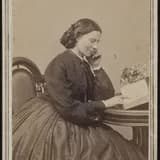
Lincoln authorized Barton to search for missing soldiers, leading to the Missing Soldiers Office and a major postwar humanitarian record-keeping effort.
On March 3, 1865, President Abraham Lincoln authorized Clara Barton to lead the search for missing soldiers and prisoners. This authorization led to the creation of the Missing Soldiers Office, one of the most compassionate and administratively ambitious projects of her career. It addressed a painful reality of the Civil War: thousands of families had no reliable information about the fate of husbands, sons, and brothers who had disappeared in the conflict.
The work was historically significant because it combined humanitarian service with record keeping, correspondence, and investigative persistence. Barton’s office became a place where grief was met with information, and uncertainty with documentation. In a war era when communication systems were fragile and casualty reporting often incomplete, her efforts helped families obtain answers that governments had failed to provide. The scale of the task also shows how Barton applied the administrative experience she had gained before the war to a deeply human problem.
Her missing-soldiers work created an enduring model of postwar humanitarian follow-up: aid was not only about wounds or supplies, but also about restoring identity, memory, and family connection. The office’s legacy is part of why Barton is remembered not just as a nurse, but as a builder of systems for civilian relief and public accountability.