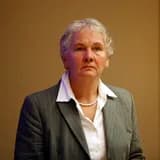
Received the prestigious Albert Lasker Award for Basic Medical Research for her discoveries on genetic control of embryonic development.
On 27 September 1991, Nüsslein-Volhard was honored with the Albert Lasker Award for Basic Medical Research, one of the most prestigious prizes in biomedical science and often regarded as a strong predictor of future Nobel recognition.
The award recognized her fundamental discoveries concerning the genes that control the body plan and early patterning of the embryo, work carried out over more than a decade at EMBL Heidelberg and the Max Planck Institute for Developmental Biology in Tübingen. The Lasker Foundation specifically cited her systematic genetic screens, conducted with Eric Wieschaus, which identified the majority of genes now known to control segmentation in Drosophila — research that had profound implications for understanding vertebrate, including human, development.
Winning the Lasker Award placed Nüsslein-Volhard among an elite group of biomedical researchers and significantly raised her international profile ahead of the Nobel Prize she would receive four years later. It also underscored the growing recognition, still rare for a woman in the sciences at that time, of her role as a leading independent principal investigator rather than as a junior collaborator — an important marker of the barriers she had overcome in a field long dominated by men.