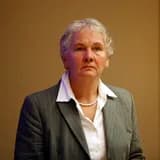
The Nobel Assembly announced Nüsslein-Volhard, with Edward Lewis and Eric Wieschaus, as 1995 Nobel Laureates in Medicine — she became the first German woman ever to win this prize.
On 9 October 1995, the Nobel Assembly at the Karolinska Institutet announced that Christiane Nüsslein-Volhard, together with Edward B. Lewis and Eric F. Wieschaus, would receive the Nobel Prize in Physiology or Medicine "for their discoveries concerning the genetic control of early embryonic development."
This announcement marked a historic milestone: Nüsslein-Volhard became the first German woman ever awarded the Nobel Prize in Physiology or Medicine, and only the tenth woman in history to receive a Nobel Prize in any scientific category up to that point. Her recognition validated decades of painstaking genetic research, particularly the large-scale mutagenesis screens she conducted with Wieschaus at EMBL Heidelberg in the late 1970s, which had identified the master genes controlling segmentation and body-plan formation in the fruit fly.
The announcement generated widespread celebration in Germany and internationally, and Nüsslein-Volhard instantly became a role model for women in the sciences, one of the very few female Nobel laureates in a STEM field to that date. Her achievement helped inspire subsequent generations of German and European women toward careers in fundamental biological research, and she has since used her prominence to actively campaign for greater support of women scientists, notably founding a foundation for female researchers with children in 2004.