← All women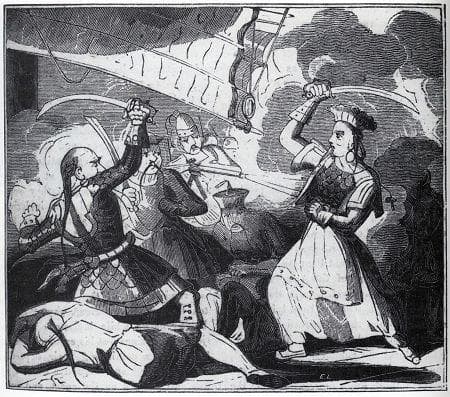
Chinese · Exploration · Activism · Law
Ching Shih
1775 – 1844
Introduction
Ching Shih, also widely known by the Cantonese and Mandarin forms of her name Zheng Shi and Zheng Yi Sao, was a Chinese pirate leader who rose from obscurity to command one of the largest pirate confederations in recorded history. Operating primarily off the coast of Guangdong and in the broader South China Sea during the early nineteenth century, she is frequently described in modern historiography and popular culture as one of the most successful pirates of all time and arguably the most powerful female pirate in history.
Her story sits at the intersection of maritime history, gender history, and the social and economic transformations of late Qing China. Drawing on the work of scholars such as Dian H. Murray, contemporary articles, and encyclopedic summaries, historians characterize Ching Shih’s career as a striking example of how a woman in a highly patriarchal society leveraged kinship networks, strategic acumen, and a volatile coastal economy to acquire and exercise extraordinary power.
Names and Historical Sources
Ching Shih’s identity in the historical record is complicated by the nature of surviving sources. She appears in Chinese archival material and in nineteenth-century European reports under several names and honorifics. The form Ching Shih is a romanization of the Chinese characters 鄭氏, meaning simply "Madame Zheng" or "Widow Zheng," rather than a personal given name. Similarly, Zheng Yi Sao (鄭一嫂) literally means "wife of Zheng Yi," and was an honorific used to identify her through her marriage to the pirate Zheng Yi.
Because her given name is not securely attested in surviving documentation, modern historians typically refer to her by these descriptive names. This circumstance reflects broader patterns in Qing-era sources, where women’s identities were often recorded in relation to male kin rather than in their own right. As a result, reconstructing Ching Shih’s life requires careful reading of pirate confederation documents, legal records, and later accounts, many of which emphasize her husband and male associates while only secondarily acknowledging her role.
Early Life and Background
Relatively little is known with certainty about Ching Shih’s early life. Modern summaries typically indicate that she was born in or near Guangdong province, with some encyclopedic sources giving a birth year of 1775, although contemporary primary documentation for this date is sparse. Historians agree that she came from modest or poor circumstances in the highly commercialized and densely populated Pearl River Delta region, a context shaped by maritime trade, piracy, and the floating entertainment economy.
Prior to her marriage to the pirate captain Zheng Yi, Ching Shih reportedly worked on a "flower boat"—a type of floating brothel operating in the harbors of Canton (Guangzhou) and elsewhere along the Pearl River system. These boats catered to merchants, officials, and sailors, positioning her within a milieu deeply connected to maritime commerce and informal networks. Although many details of this phase of her life are reconstructed from later narratives rather than contemporaneous personal records, it is clear that she was familiar with the social and economic dynamics of coastal China and with the ways in which information, rumor, and patronage circulated among sailors and clients.
The move from this world into pirate leadership illustrates the permeability of boundaries between legal and illegal maritime activity in the late eighteenth and early nineteenth centuries. In Guangdong, coastal communities frequently navigated a spectrum ranging from licensed trade to smuggling and piracy, and women in the sex trade could become important intermediaries through their access to information and relationships with powerful men.
Marriage to Zheng Yi and Entry into Piracy
Ching Shih’s transition into piracy occurred through her marriage to Zheng Yi, a prominent pirate commander active off the coast of Guangdong and in the South China Sea. Sources generally place their marriage around 1801, when she left the flower boats to become his wife and partner. Zheng Yi headed a significant pirate force, and over subsequent years he worked to consolidate several major pirate fleets into what became known as the Guangdong Pirate Confederation.
Historians emphasize that Ching Shih’s role in this process was neither passive nor merely domestic. Later narratives and modern analyses note that she was an effective strategist and negotiator who contributed substantially to her husband’s success in uniting disparate fleets under a common structure. Within the confederation, these fleets—including the famous Red Flag Fleet—operated under agreed rules, shared spoils, and coordinated raids and defenses.
Marriage within pirate society in Qing China often served as a means of cementing alliances and securing loyalty. Ching Shih’s marriage to Zheng Yi not only elevated her social standing but also positioned her at the center of a complex maritime network. Her familiarity with economic and patronage systems, combined with her proximity to decision-making, enabled her to develop deep knowledge of the confederation’s strengths, weaknesses, and internal politics.
Rise to Power After Zheng Yi’s Death
Zheng Yi’s death in 1807, reportedly during a gale at sea in which he was washed overboard, created an abrupt leadership vacuum at the head of the pirate confederation. In many contexts, such a loss might have precipitated factional conflict or the elevation of another male commander. Instead, Ching Shih moved swiftly and effectively to secure control of the organization.
Working through established kinship and patronage ties, she negotiated with key captains and faction leaders to ensure that authority passed to her rather than dissipating among rivals. A crucial element of this transition was her relationship with Zhang Bao (also rendered Cheung Po Tsai), a younger pirate who had previously been adopted by Zheng Yi and was widely regarded as his heir apparent. Rather than competing with Zhang Bao, Ching Shih formed a partnership with him, aligning their interests and thereby maintaining continuity of leadership.
This move reflects her ability to operate within the structures of patriarchy and lineage rather than attempting to overturn them outright. By positioning herself as Zheng Yi’s widow and guardian of his heir, she framed her leadership in terms that resonated with existing norms while simultaneously asserting unprecedented personal authority. Modern historians note that this strategy was key to the stability of the confederation during the transition period.
Command of the Guangdong Pirate Confederation
Once in command, Ching Shih oversaw a pirate confederation of extraordinary scale. Estimates vary by source and period, but many modern accounts describe her at the height of her power as directing a fleet of hundreds of ships—often cited as 300 to 400 or more—and commanding from 20,000 to as many as 70,000–80,000 pirates, including men, women, and children. The confederation’s reach extended throughout the South China Sea, with significant influence around the Pearl River Delta, coastal Guangdong, and the approaches to key ports.
The confederation was organized into color-coded fleets, of which the Red Flag Fleet was the most prominent and powerful. Ching Shih, as leader of the confederation and of this flagship fleet, exercised overall strategic control. She directed raids on shipping, levied protection payments from coastal communities, and engaged in battles against state and foreign naval forces. The confederation’s ability to coordinate multiple fleets under her command gave it a level of operational sophistication uncommon in pirate organizations.
From approximately 1807 until around 1810, Ching Shih’s forces effectively dominated large parts of the South China Sea, disrupting Qing imperial control and undermining coastal security. Contemporary and retrospective assessments underscore that, for nearly a decade including her years alongside Zheng Yi and those after his death, she either shared power or exerted outright control over maritime violence and trade along key routes.
Pirate Code and Governance
One of the most striking aspects of Ching Shih’s leadership was her imposition of a strict pirate code governing behavior within the confederation. Although details vary across later accounts and are sometimes colored by legend, consistent themes include severe penalties for disobedience, theft of communal goods, desertion, and sexual violence.
Rules reportedly mandated that captured goods be registered and fairly distributed according to agreed shares, with unauthorized appropriation punished harshly. Desertion or failure to follow orders in battle could result in execution, reflecting the confederation’s need for discipline in the face of powerful state navies. In several modern retellings, Ching Shih’s code is said to have prohibited the rape of female captives, with offenders subject to capital punishment—a detail that, while difficult to verify in every particular, aligns with broader patterns of regulated conduct in highly organized pirate societies.
By enforcing such regulations, Ching Shih created a degree of internal stability that enabled her to coordinate large-scale operations. The code contributed to trust in leadership, predictability in the distribution of spoils, and deterrence of intra-fleet violence that might otherwise have fractured the confederation. This legalistic, quasi-military governance structure is a key reason historians classify her organization as a formidable "outlaw empire" rather than a loosely connected band.
Military Campaigns and Confrontations
Under Ching Shih’s leadership, the Guangdong Pirate Confederation engaged in numerous raids and battles. Her fleets attacked merchant shipping, extracted payments from villages, and confronted Qing imperial forces seeking to suppress piracy. The confederation’s success forced the Qing government to commit substantial resources to maritime defense, including coordinated naval campaigns.
Chinese sources and later historical analyses note that Ching Shih’s forces defeated multiple Qing naval flotillas and humiliated imperial commanders. Some modern accounts also describe clashes with the Portuguese navy and with vessels associated with the British East India Company, underscoring the international dimension of her activities in a region increasingly integrated into global trade networks. These encounters enhanced her reputation for ferocity and tactical skill, and they contributed to the perception—among local communities and foreign observers alike—that the pirates had temporarily eclipsed state authority at sea.
The confederation’s violence was significant, with scholars noting that tens of thousands of lives were lost in the course of pirate operations and government suppression efforts during this period. Nonetheless, Ching Shih’s campaigns also served to highlight the limitations of Qing maritime control and the vulnerabilities of imperial governance in coastal regions undergoing economic change and external pressures.
Negotiated Amnesty and Surrender
By around 1810, sustained military pressure, internal strains, and shifting economic conditions made continued large-scale piracy increasingly difficult. Instead of fighting to annihilation or facing certain execution if captured, Ching Shih pursued a negotiated settlement with the Qing authorities. Utilizing her position and influence, she entered into discussions that ultimately produced one of the most notable amnesty agreements in pirate history.
Under the terms of this amnesty, Ching Shih and many of her followers were permitted to surrender their ships and arms in exchange for imperial clemency. Crucially, the agreement allowed her closest associates—particularly Zhang Bao—to receive official ranks or posts within the Qing military structure, effectively transforming some pirate leaders into state-recognized naval commanders. Large numbers of rank-and-file pirates also benefited from reduced or waived punishments when they laid down their arms.
This outcome stands in marked contrast to the fate of many other notorious pirates in world history, who were tried and executed once captured. The negotiated surrender illustrates both Ching Shih’s political skill and the pragmatic calculus of Qing officials, who judged that integrating elements of the confederation into imperial structures might be more effective than attempting total eradication. The amnesty marks a turning point in her life, moving her from outlaw status to that of a woman living under imperial protection.
Later Life and Retirement
After the 1810 amnesty, Ching Shih left active piracy. Modern accounts generally state that she lived out her remaining decades in relative security in Guangdong. She reportedly engaged in legitimate business, with some sources identifying her as the operator of a gambling house, a type of enterprise common in urban and semi-urban settings where social networks and capital accumulated through previous activities could be redeployed.
Her relationship with Zhang Bao continued after the amnesty, and many narratives describe them as having formally married once he assumed a recognized position under the Qing government. Their partnership, originally forged in the crucible of pirate politics, thus carried over into a more regularized social context. Ching Shih’s later years appear to have been spent largely outside the official limelight, in contrast to the dramatic publicity surrounding her pirate career.
Encyclopedic sources record that she died in 1844, some three decades after her surrender. The precise circumstances of her death are not well documented, but she is generally said to have died peacefully, a rarity among major pirate figures. Her ability to retire from piracy, avoid execution, and maintain wealth and autonomy makes her one of the few documented pirate leaders in any region to have exited the trade on terms largely favorable to herself.
Historical Assessment and Legacy
Ching Shih’s legacy has grown considerably in modern times, particularly as historians have devoted greater attention to women’s roles in non-state power structures and as popular culture has sought memorable figures from maritime history. Scholarly treatments emphasize her as a case study in informal empire-building, gendered leadership, and the economics of piracy in late imperial China.
She is frequently cited as the most successful female pirate in history, and in many lists and articles she is positioned alongside or above better-known Atlantic figures such as Blackbeard, Henry Morgan, and Anne Bonny. The sheer scale of her confederation, her ability to defeat state forces, and her successful negotiation of amnesty distinguish her from most contemporaries. Her story also provides a counterpoint to narratives that frame piracy as overwhelmingly masculine by demonstrating how a woman could navigate and manipulate patriarchal systems to command thousands of men.
In recent decades, Ching Shih has inspired fictional portrayals and popular reimaginings. She appears, in various forms, in novels, comics, video games, and films, including the character of "Mistress Ching" in the Pirates of the Caribbean franchise, which draws loosely on her historical reputation. Internet articles, podcasts, and videos often celebrate her as a "pirate queen" and as a proto-icon of female empowerment, although careful historians stress the importance of situating her in the specific socio-political context of early nineteenth-century Guangdong.
Gender, Power, and Nuanced Interpretation
While modern audiences sometimes cast Ching Shih as an uncomplicated feminist hero, critical analyses highlight the complexity of her position. She operated within a patriarchal society and a violent enterprise that inflicted suffering on coastal communities and merchant networks. Her success depended not only on personal audacity but also on the exploitation of existing kinship structures, patronage systems, and the economic instability of the Qing state’s coastal frontier.
Historians argue that she did not stand outside patriarchy so much as use its norms to her advantage. By claiming authority as Zheng Yi’s widow, leveraging her connection to Zhang Bao, and placing herself at the nexus of lineage and leadership, she secured loyalty in a way that was legible and legitimate to her followers. Her strict discipline and corporate governance also suggest a leader concerned with stability and predictability—qualities necessary for sustaining large-scale illicit operations.
At the same time, her achievements challenge assumptions about women’s capacities and roles in premodern East Asia. The fact that imperial officials negotiated with her as a political actor and effectively granted her terms of surrender acknowledges her agency in shaping events. Her story thus serves as an important resource for women’s history, illustrating both the constraints and possibilities faced by women who stepped beyond conventional domestic boundaries in earlier eras.
Ching Shih in Global Pirate History
Within the broader framework of global pirate history, Ching Shih represents a distinctive non-Western example of organized maritime predation. Much of popular pirate lore centers on the Caribbean, Atlantic, and European coasts; her career reminds researchers and readers that large-scale piracy also flourished in Asian waters, interacting with imperial and colonial systems in different ways.
The Guangdong Pirate Confederation under her leadership played a significant role in the regional balance of power, compelling the Qing state to confront the limits of its maritime capacity. The confederation’s activities intersected with the period leading up to the Opium Wars and other forms of foreign intrusion, though Ching Shih’s main sphere of influence preceded the most intense phases of those conflicts. Nonetheless, her dominance over the South China Sea prefigured later struggles over control of Asian waters and trade routes.
For scholars of piracy, Ching Shih’s career offers valuable insights into how outlaw organizations can achieve quasi-governmental authority, with codes, taxation-like practices, and diplomatic engagement with states. For historians of women, she stands as an example of how gendered expectations can be both constraint and resource, shaping the strategies by which women access and exercise power.
Conclusion
Ching Shih’s life, though imperfectly documented and partly enveloped in legend, remains one of the most striking narratives in maritime and women’s history. From humble beginnings on Canton’s flower boats to the command of a vast pirate confederation, from violent confrontations with imperial navies to an unprecedented amnesty and peaceful retirement, her trajectory illustrates the fluidity of power at sea and the ways in which individuals could exploit structural weaknesses in state authority.
Her prominence in modern culture and scholarship reflects not only the drama of her story but also a broader interest in recovering women’s experiences in domains traditionally assumed to be male. While nuanced historical work continues to refine and sometimes challenge popular portrayals of her as a straightforward feminist icon, there is clear consensus that Ching Shih was a leader of extraordinary capability whose impact on the South China Sea during the early nineteenth century was profound.
As research on late Qing coastal society and pirate organizations progresses, future studies may further clarify details of her life and contextualize her within larger patterns of regional history. For now, she endures as a symbol of female leadership in a violent world, and as a reminder that the seas of history were shaped by a more diverse cast of actors than traditional narratives once suggested.
Dated achievements
1 indexed.
- Apr201810Law
Formal Surrender and Amnesty Negotiated with the Qing Government
Ching Shih negotiated a formal surrender to the Qing dynasty, securing amnesty for the vast majority of her pirate fleet in one of history's most successful pirate retirements.
View details Zheng Yi Sao - Wikipedia