← All women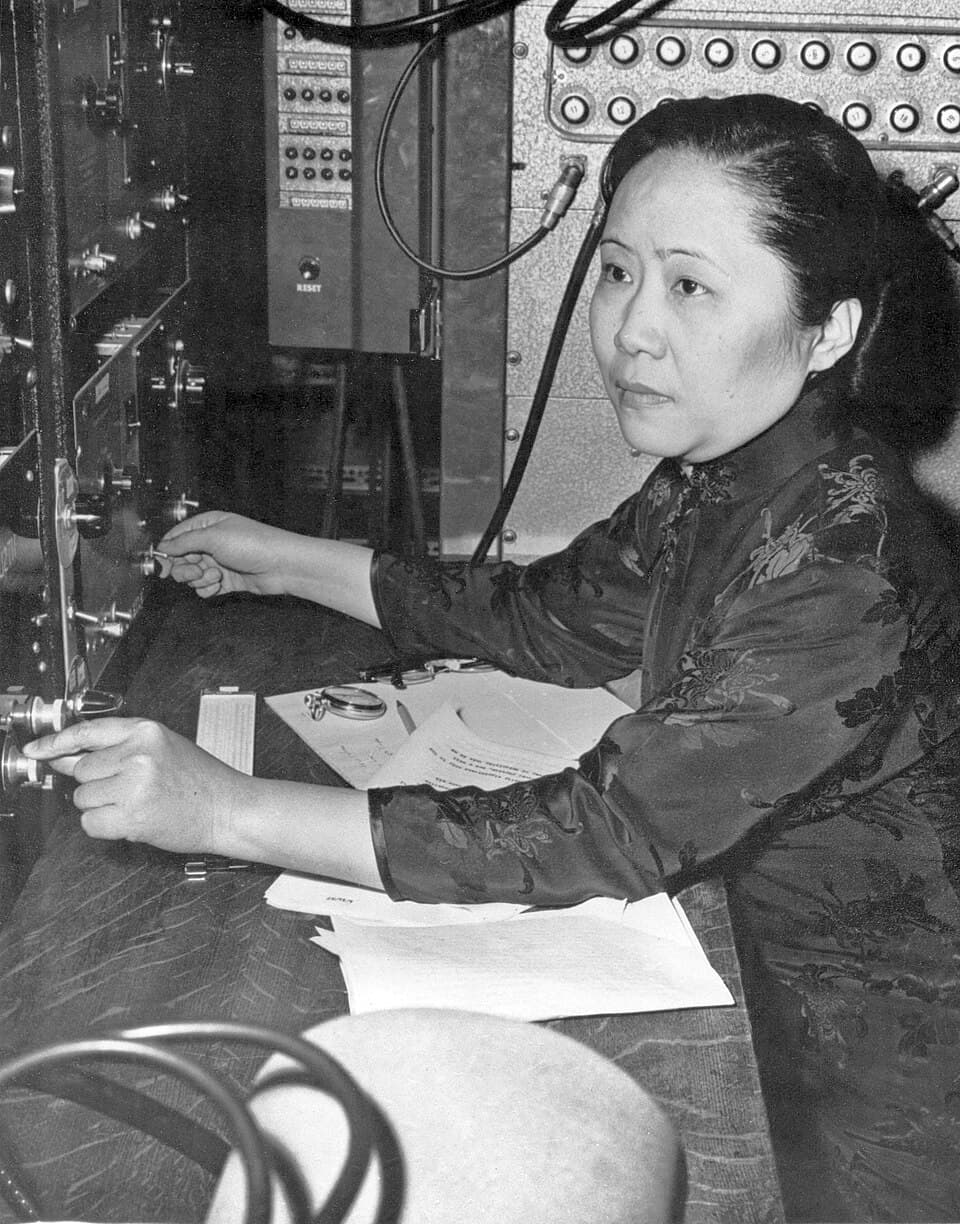
Chinese, American · Science
Chien-Shiung Wu
May 29, 1912 – February 16, 1997
Early Life and Background
Chien-Shiung Wu (Chinese: 吳健雄; pinyin: Wú Jiànxióng) was born on 29 May 1912 in Liuhe, Taicang, in Jiangsu province, China.[2][4][7] Although some modern sources list her birth date as May 31, major reference works such as Encyclopaedia Britannica and several institutional biographies adopt May 29 as the canonical date.[2][4] She grew up near Shanghai in a family that strongly valued education. Her father, Wu Zhongyi, founded a girls’ school and advocated for women’s rights and access to learning, an unusually progressive stance in early twentieth-century China.[1][7] Her mother, Fan Xiang, also encouraged her studies.
Wu’s childhood coincided with a turbulent era of Chinese history: the fall of the Qing dynasty, the 1911 Revolution, and subsequent political upheavals. In this context, her family’s commitment to education and reform left a deep imprint. She attended her father’s school and then the Suzhou Women’s Normal School, where she studied science and became interested in physics.[1][7] Wu excelled academically, reading widely in mathematics and science while also absorbing the reformist and nationalist ideas circulating among Chinese intellectuals.
After secondary school, she enrolled at National Central University in Nanjing (later Nanjing University), where she majored in physics. She graduated in the mid-1930s at or near the top of her class, earning recognition for her exceptional performance.[4][17] During this period, she conducted an undergraduate thesis on X-ray absorption, supervised by Professor Xingzhi Ge, which strengthened her interest in experimental physics.
Studies Abroad and Doctoral Training
China in the 1930s offered limited opportunities for advanced research in physics, and Wu became determined to study abroad. With support from mentors and family, she traveled to the United States in 1936.[4][7] Arriving in California, she briefly studied at the University of Michigan but soon moved to the University of California, Berkeley, whose physics department was then one of the world’s most dynamic centers for nuclear research.[4][7]
At Berkeley, Wu came under the supervision of Ernest O. Lawrence, inventor of the cyclotron and later a Nobel laureate, and worked closely with experimentalist Emilio Segrè.[4] She specialized in beta decay, a form of radioactive decay in which a neutron in a nucleus transforms into a proton (or vice versa), emitting an electron or positron and a neutrino. Her doctoral research involved careful measurements of beta spectra, at a time when the nature of beta decay and the neutrino was still poorly understood.
Wu earned her Ph.D. in physics from UC Berkeley in 1940.[4][7] Her dissertation committee included future Nobel laureates Luis Alvarez and Glenn Seaborg, reflecting the elite environment in which she trained.[4] Her thesis work on beta decay established her reputation as an exceptionally skilled experimentalist, comfortable with challenging measurements and complex apparatus.
Career Beginnings in the United States
After completing her Ph.D., Wu remained in the United States as global events made return to war-torn China difficult. In the early 1940s she taught and conducted research at several institutions, including Smith College and the Princeton University physics department.[4][10] At Princeton, she became one of the first, and widely described as the first, woman hired as a faculty member in the department, breaking gender barriers in a traditionally male-dominated institution.[10][1] Her teaching and research work there further honed her experimental skills and introduced her to a broader network of American physicists.
Wu’s expertise in nuclear physics and radiation detection soon attracted attention during World War II. In 1944 she left Princeton to join the Manhattan Project at Columbia University, one of the U.S. sites devoted to developing the first nuclear weapons.[3][4][7] At Columbia, she worked on improving Geiger counters for radiation detection, contributed to methods for large-scale uranium enrichment, and helped diagnose "xenon poisoning" in the Hanford B Reactor—an unexpected buildup of xenon-135 that absorbed neutrons and temporarily prevented the reactor from reaching criticality.[3][7][14]
Her work on the Manhattan Project was essential to solving practical problems in reactor design and uranium processing, though it remained classified for many years. Wu’s contributions exemplify how women scientists played vital but often under-recognized roles in wartime research. After the war, she continued at Columbia University, moving into academic positions and consolidating her status as a leading experimental physicist.[4][6]
Major Experiments and Scientific Contributions
Beta Decay and Fermi’s Theory
In the late 1940s, Wu undertook a series of experiments that provided important tests of Enrico Fermi’s theory of beta decay. In 1949, she designed and conducted an experiment that yielded the first clear experimental confirmation of Fermi’s theoretical framework, demonstrating that electrons emitted in beta decay travel at extremely high velocities consistent with relativistic predictions.[6][12][17] Her meticulous measurements clarified the energy distribution of beta particles and helped establish the reliability of Fermi’s description of weak interactions.
Also in 1949, Wu performed a landmark photon angular-correlation experiment that probed the directional relationships between photons from nuclear transitions.[5][6] The results provided one of the first important experimental confirmations of quantum entanglement relevant to the famous Einstein–Podolsky–Rosen (EPR) paradox, validating calculations by physicists Pryce and Ward.[5] Though less widely known than her later parity work, these experiments demonstrated Wu’s ability to design incisive tests of deep theoretical questions.
Parity Violation and the "Wu Experiment"
Wu’s most famous contribution came in the mid-1950s. At that time, physicists believed that the laws of physics were invariant under parity transformation—that is, mirror-image versions of physical processes should behave identically. This symmetry was thought to be universal. In 1956, theorists Tsung-Dao Lee and Chen-Ning Yang questioned whether parity must hold in weak interactions, such as beta decay, and proposed experiments to test their hypothesis.[5][6][9]
Lee and Yang approached Wu, recognizing her unequaled expertise in beta decay, to implement a crucial experiment. Wu devised a low-temperature experiment using cobalt-60, a radioactive isotope that undergoes beta decay, and arranged to conduct it at the National Bureau of Standards. By cooling cobalt-60 nuclei to very low temperatures in a magnetic field, she could observe whether electrons were emitted symmetrically or preferentially in a particular direction relative to the nuclear spin.[2][5][6]
In late 1956, Wu and her collaborators carried out what became known as the "Wu experiment". The results showed a clear asymmetry: electrons were emitted preferentially in one direction, indicating that the mirror-image process would not behave the same. This demonstrated that parity conservation is violated in weak nuclear interactions.[2][5][6] The findings were announced and published in early 1957, providing the first definitive experimental proof that a long-accepted symmetry principle fails in the weak force.
This discovery had enormous implications. It upended a foundational assumption of physics and opened new lines of research in particle physics, eventually contributing to the development of the Standard Model. The 1957 Nobel Prize in Physics was awarded to Lee and Yang for their theoretical work, but Wu’s key experimental role was not similarly honored, a decision widely criticized as emblematic of gender and status biases in scientific recognition.[5][7][16]
Awards, Honors, and Recognition
Over the course of her career, Chien-Shiung Wu received numerous awards that recognized her scientific achievements and her trailblazing role as a woman in physics. In 1951, she was awarded the Comstock Prize in Physics by the U.S. National Academy of Sciences for her distinguished investigations in nuclear physics, becoming the first woman to receive this prize.[5][13] This early honor acknowledged the importance of her beta decay work.
In 1958, Wu was elected to the National Academy of Sciences, one of the highest distinctions for a U.S.-based scientist.[4] Later in her career, she was also elected to the Chinese Academy of Sciences in 1994, symbolizing recognition from both her home country and her adopted one.[4]
Wu received the National Medal of Science of the United States in 1975 for her contributions to experimental nuclear physics.[3][4] She also earned multiple other honors, including the Research Corporation Award, the John Price Wetherill Medal of the Franklin Institute, and the Tom Bonner Prize of the American Physical Society.[4]
Her most prominent international honor came in 1978, when she received the inaugural Wolf Prize in Physics. Wu was the first woman laureate of this prize, which cited her contributions to beta decay and the experimental confirmation of parity violation.[3][4][5] The Wolf Prize is often regarded as second only to the Nobel Prize in prestige, and Wu’s selection reinforced her status as one of the world’s leading physicists.
Beyond formal awards, Wu was widely known by nicknames such as the "First Lady of Physics" and the "Chinese Marie Curie," reflecting the esteem in which colleagues held her.[1][7] She received nine honorary doctorates from various institutions and, in later years, became the first female physicist honored by the U.S. Postal Service with a commemorative stamp.[4]
Academic Career at Columbia University
After wartime work on the Manhattan Project, Wu established her long-term academic career at Columbia University in New York. She rose through the ranks to become a full professor, specializing in experimental nuclear physics and mentoring generations of students.[4][6] Her laboratory became a center for sophisticated nuclear experiments, and she was known for demanding rigor and precision from her students and collaborators.
Wu’s work at Columbia encompassed not only parity violation and beta decay but also studies of nuclear structure and weak interaction processes. Her influence extended internationally through lectures and collaborations, and she became a visible figure in the global physics community.
In addition to her research, Wu played important leadership roles in professional societies. Notably, she became the first woman elected president of the American Physical Society
Wu retired from her formal positions at Columbia University in 1981, after more than three decades of research and teaching.[1][3] Even in retirement, she continued to lecture, advise, and advocate for science and for women’s participation in the field. Chien-Shiung Wu married Luke Chia-Liu Yuan, a physicist and grandson of prominent Chinese figure Yuan Shikai.[5][7] The couple met through scientific circles and shared professional interests. Wu chose not to adopt her husband’s surname, a decision that reflected both practical concerns about academic recognition and her commitment to maintaining her own identity.[16] Their son, Vincent Yuan, also pursued a career connected to science and engineering. Wu’s family life, while relatively private, intersected with her public roles; she balanced research and motherhood at a time when institutional support for women with families was minimal. Wu maintained strong ties to China throughout her life, visiting and corresponding with family and colleagues. She was deeply affected by events such as the Sino-Japanese War and later political changes in China. Nonetheless, most of her career and adult life unfolded in the United States, where she eventually became a U.S. citizen and a central figure in American physics.[5][7] Beyond her scientific work, Wu was a vocal advocate for women in science. She frequently spoke about the barriers facing women, questioning why girls and women were discouraged from scientific careers and calling for equal opportunities and pay.[1][11][16] She used her platform as a renowned physicist and as president of the American Physical Society to highlight gender inequities in academia and research. Wu’s own experiences—navigating male-dominated institutions, being overlooked for the Nobel Prize despite central contributions, and confronting stereotypes about Chinese and women scientists—shaped her views. She argued that scientific talent was not limited by gender and that society lost potential by sidelining women. Her speeches and public comments helped inspire subsequent generations of women physicists and contributed to broader conversations about diversity in STEM.[1][11] Chien-Shiung Wu’s legacy rests on both her scientific discoveries and her symbolic role as a pioneering woman and Chinese American in physics. Scientifically, her confirmation of parity violation in weak interactions stands as one of the most profound experimental results in twentieth-century physics. It reshaped the understanding of fundamental symmetries and paved the way for the theoretical structures that would become the Standard Model.[2][5][6] Her earlier work on beta decay and photon correlations also made lasting contributions, validating core theoretical frameworks and advancing quantum physics. Her skill in experimental design, attention to detail, and insistence on robust data became a model for experimental practice in nuclear and particle physics.[6][10] Historically, Wu’s career demonstrated that women and immigrants could rise to the highest levels of scientific leadership despite entrenched biases. She became a role model for women in physics worldwide, often cited alongside Marie Curie as an example of women’s capacity to contribute to fundamental science.[1][7] Institutional recognition through awards, academy memberships, and commemorative stamps has further cemented her place in the scientific canon. Museums, universities, and organizations—including UNESCO, the Oxford University Museum of Natural History, and various U.S. institutions—now highlight Wu’s story in exhibitions and educational materials.[7][10][1] Her life is frequently discussed in histories of the Manhattan Project, in studies of women in science, and in accounts of twentieth-century physics. In her later years, Wu continued to lecture and engage with scientific and public audiences, even after retiring from Columbia in 1981.[1][3] She visited China, maintained connections with international colleagues, and remained a respected voice in discussions of physics and scientific policy. On 16 February 1997, Wu died at her home in New York City.[2][5] She was 84 years old. Her passing prompted tributes from scientific institutions around the world, which emphasized her role in transforming modern physics and her pioneering status as a woman and Chinese American physicist. Wu was buried in China, and memorials in both China and the United States honor her contributions. The enduring recognition of her work—including educational biographies, museum exhibits, and the continued citation of the "Wu experiment" in physics textbooks—attests to the lasting impact of her research and her example. Today, Chien-Shiung Wu is remembered not only for overturning a supposed universal law of nature but also for challenging social expectations about who could be a physicist. Her life story, spanning early education in a girls’ school in Jiangsu to groundbreaking experiments in U.S. laboratories, remains central to the history of women in science and to the development of twentieth-century physics.Personal Life
Advocacy and Views on Women in Science
Legacy and Historical Impact
Later Life and Death
Dated achievements
5 indexed.
- May291912Science
Birth of Chien-Shiung Wu
Chien-Shiung Wu was born in Liuhe, Jiangsu province, China, later becoming a pioneering experimental physicist.
View details Chien-Shiung Wu | Biography, Discoveries, & Facts - Jan011951Science
First woman to receive the Comstock Prize in Physics
Wu became the first woman awarded the National Academy of Sciences' Comstock Prize in Physics for her nuclear physics research.