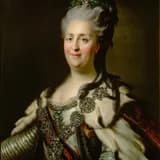
Catherine undergoes smallpox inoculation on 12 October 1768, becoming among the first in Russia to be immunized and championing vaccination publicly.
On 12 October 1768, Catherine the Great underwent inoculation against smallpox, performed by the English physician Thomas Dimsdale, whom she had specially invited to Russia for this purpose. At a time when smallpox epidemics regularly devastated European populations and inoculation itself carried real risk (using live virus material, predating Jenner's safer vaccination method), Catherine's decision to undergo the procedure was a remarkably bold personal and political act.
Recognizing the immense symbolic power of her example, Catherine had herself inoculated in secret initially, with a getaway carriage reportedly kept ready in case the procedure caused illness or death, before recovering and revealing publicly what she had done. She then had her son Paul inoculated as well, and encouraged the nobility and wider population to follow her example.
Her action helped overcome widespread public fear and superstition surrounding inoculation in Russia, making her one of the first members of Russian society — and one of the first monarchs anywhere — to publicly champion the practice as an instrument of state health policy. Thomas Dimsdale was rewarded with a large sum of money, an annual pension, and the title of Baron of the Russian Empire. Catherine's example significantly advanced the spread of smallpox inoculation across Russia, saving countless lives and marking an early triumph of Enlightenment science over superstition in Russian public health.