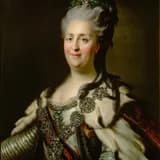
Peter III dies under suspicious circumstances at Ropsha on 17 July 1762, days after Catherine's coup.
Just eight days after Catherine's coup deposed him, the former Emperor Peter III died at Ropsha, a country estate outside St Petersburg, on 17 July 1762. He had been placed under guard following his forced abdication, and his death was officially attributed to a bout of "hemorrhoidal colic," though most historians believe he was killed, likely strangled, by his guards — possibly including Alexei Orlov, brother of Catherine's lover Grigory Orlov.
The circumstances of Peter's death remain one of the great unresolved mysteries of Russian imperial history. Whether Catherine directly ordered his killing or merely benefited from the actions of overzealous supporters is still debated by historians, but the timing was undeniably convenient for consolidating her hold on power, eliminating any rival claim to the throne through her deposed husband.
Peter's death removed the last significant obstacle to Catherine's undisputed rule, allowing her to present herself as sole legitimate sovereign without the destabilizing presence of a living, deposed emperor who might become a rallying point for opposition. The episode cast a long shadow over her reputation, fueling both contemporary rumor and later legend about the ruthlessness underlying her rise to power, even as she went on to become one of Russia's most consequential rulers.