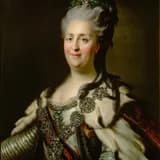
Catherine convenes Russia's first empire-wide representative assembly in Moscow on 30 August 1767 to consider her Nakaz law code.
On 30 August 1767, Catherine the Great opened the Legislative Commission in Moscow, an unprecedented gathering that brought together over 500 representatives from across the vast Russian Empire — nobles, townspeople, free peasants, and non-Russian ethnic groups — to discuss comprehensive legal reform based on her Nakaz (Instruction), a document deeply influenced by Enlightenment thinkers like Montesquieu and Beccaria.
This assembly represented the first attempt in Russian history to create a broadly representative body reflecting the diverse social estates of the empire, an extraordinary experiment for an absolute monarchy. Catherine's Nakaz articulated startlingly liberal principles for the era, including arguments against torture and capital punishment and gestures toward legal equality, even as it stopped short of challenging serfdom or autocracy itself.
Though the Commission ultimately failed to produce a new law code — it was suspended in 1768 amid the outbreak of war with the Ottoman Empire and never reconvened in full — its convening was a landmark moment. It demonstrated Catherine's genuine, if constrained, engagement with Enlightenment ideas of governance and consultation, and it produced an invaluable historical record of grievances and conditions across the empire's diverse populations. The Commission's proceedings remain a key primary source for historians studying 18th-century Russian society.