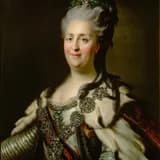
On 18 August 1795, Catherine grants 100,000 serfs in one day to favored nobles, illustrating the vast scale of her patronage system.
On 18 August 1795, Catherine the Great granted approximately 100,000 serfs in a single day to favored courtiers, generals, and officials, one of the largest single acts of patronage recorded during her reign. Such mass grants of land and the peasants bound to it were a central mechanism through which Catherine rewarded loyalty, military service, and political support among the Russian nobility.
Over her 34-year reign, Catherine is estimated to have granted away many hundreds of thousands of state peasants into private serfdom, dramatically expanding the scope and severity of the institution. This particular grant, made late in her reign following the Second and Third Partitions of Poland, likely involved newly acquired territories and populations absorbed into the empire, redistributed to consolidate loyalty among the elite responsible for administering and securing Russia's expanded western borders.
This event starkly illustrates the profound contradiction at the heart of Catherine's rule: even as she corresponded with Enlightenment philosophers and cultivated an image as an enlightened, reform-minded monarch, her actual governance deepened and expanded one of the most oppressive institutions in Russian history. Serfdom under Catherine reached its most entrenched form, with peasants increasingly treated as property that could be bought, sold, and gifted en masse — a legacy that would not be undone until the Emancipation Reform of 1861, more than six decades after her death.