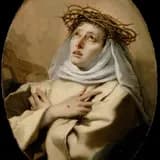
Pope Paul VI declared Catherine of Siena a Doctor of the Church, one of the first women ever granted this title.
On 4 October 1970, Pope Paul VI declared Catherine of Siena a Doctor of the Church, an extraordinary honor reserved for individuals whose writings and teachings are deemed to have made an outstanding contribution to Christian theology and spirituality. This declaration, made alongside that of Teresa of Ávila the same year, marked the very first time in the nearly two-thousand-year history of the Roman Catholic Church that this title had been conferred upon women.
Prior to 1970, all Doctors of the Church, a group including figures such as Augustine, Aquinas, and Jerome, had been men, largely reflecting the historical exclusion of women from formal theological education and ecclesiastical authority. Catherine's recognition was thus a landmark, barrier-breaking moment, formally acknowledging that a largely self-taught laywoman's theological insight, expressed through her dictated masterwork the Dialogue of Divine Providence and her hundreds of surviving letters, was equal in doctrinal significance to that of the Church's most celebrated male theologians.
The declaration validated centuries of devotion to Catherine as a mystic and reformer, while also serving as a powerful statement about women's capacity for theological authority within a deeply patriarchal institution. It has since paved the way for additional women, including Thérèse of Lisieux and Hildegard of Bingen, to receive the same distinction.
This honor remains one of the most significant recognitions of a woman's intellectual and spiritual legacy in Church history.