← All women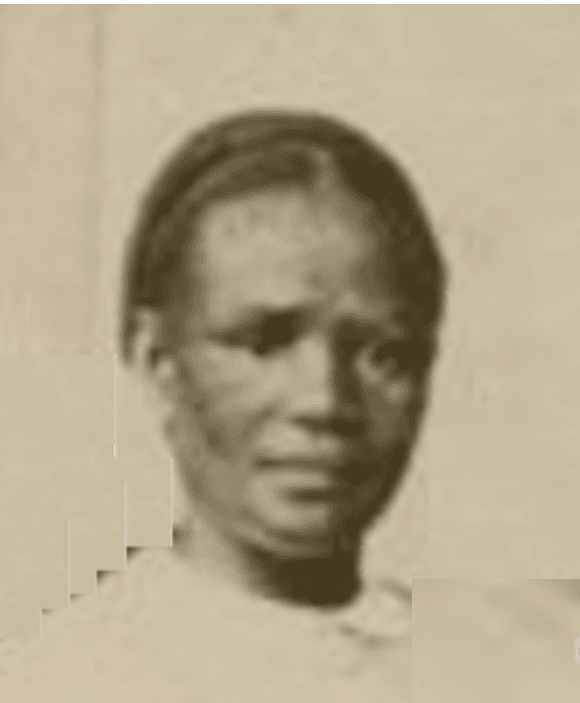
Angolan, Ghanaian · Activism · Literature
Catherine Mulgrave
November 19, 1827 – January 14, 1891
Early Life and Background
Catherine Elisabeth Mulgrave, known in childhood as Gewe, was born on 19 November 1827[1][2][5][6][9] Later accounts describe her father either as a prince or as a respected African Christian merchant influenced by European culture, while her mother came from a prominent Christian "mulatto" family of mixed African and Portuguese descent.[1][5][9] These family ties placed her within the Luso‑African world of west‑central Africa, where Catholic and Protestant influences overlapped with local political authority.
Mission historiography and biographical research emphasise that Catherine’s earliest years were shaped by both Christian upbringing and the growing pressures of the Atlantic slave trade.[5][9][17] Around the age of five or six, she and an older cousin were kidnapped by Portuguese slave traders while on their way to school, a detail that underscores how even children from Christian and relatively privileged families could be seized in the illegal trade to the Americas.[1][5][9] The girls were taken aboard the Portuguese schooner Heroína, which had embarked 303 enslaved Africans on the Angolan coast in 1833 and was bound for Cuba.[9]
During the transatlantic crossing, Catherine and her cousin were kept in the captain’s cabin, a placement that may have reflected both their youth and the captain’s perception of their social status.[1][5][9] Conditions aboard the Heroína were typical of slave ships: contemporary records indicate that at least four captives drowned in the eventual wreck and many more died during the voyage.[9] The ship was wrecked off the coast of Jamaica in 1833, then British territory. Under the terms of Britain’s 1807 Act abolishing the slave trade, the surviving captives were legally freed and apprenticed rather than re‑enslaved.[2][9] Catherine, still a child, was entrusted to members of the Moravian Church in Jamaica, a turning point that redirected her life from bondage to education.
Education and Formation in Jamaica
In Jamaica, Catherine entered the Moravian mission milieu that combined evangelical Protestantism with schools for enslaved and liberated Africans.[5][9][17] The Moravians, part of a wider movement of missionary societies working among Afro‑Caribbean populations, provided her with a British‑style education that included literacy, religious instruction, and domestic skills. Later descriptions of her character by Basel Mission sources highlight her "gifted mind", "decided piety", and aptitude for leadership and administration.[1][5]
Biographical studies suggest that Catherine’s experience as an apprenticed child in Jamaica exposed her both to racial hierarchies and to opportunities unavailable to most survivors of the slave trade.[9][17] She learned English and acquired familiarity with British cultural norms, while also being shaped by Afro‑Jamaican Christian communities that interpreted the Gospel in the context of plantation society and abolition.[5][16] In this environment, mission schooling for girls was relatively rare, and Catherine’s progress through the Moravian system prepared her for a future as a teacher and catechist.
Sometime in the early 1840s, Catherine became involved in the recruitment initiative of the Basel Mission of Switzerland, which sought to send returning African Christians from the Caribbean to the West African coast.[4][16] These recruits, often of enslaved or liberated slave background, were seen as culturally closer to West Africans than European missionaries and better able to survive the climate and diseases. Catherine’s linguistic skills, Christian commitment, and teaching experience made her an attractive candidate for this project.
Migration and Career Beginnings on the Gold Coast
In 1843, Catherine joined a group of 24 Caribbean mission recruits from Jamaica and Antigua who sailed under Basel Mission auspices to the Gold Coast, then a mosaic of African polities under varying European influence.[2][4][16] On 8 March 1843, their ship arrived at Christiansborg, the Danish protectorate now part of Osu in Accra, Ghana.[2][4][16] Mission historians interpret this arrival as part of a broader pattern of "returning" African Christians—people of African descent who had been enslaved or born in the Americas—coming to West Africa as evangelists and teachers.[4][16]
At Christiansborg, Catherine entered a new social world. The Basel Mission, although a European organisation, relied heavily on African and Caribbean staff for its work among local populations. She began contributing to educational and catechetical activities, drawing on her Jamaican training.[5][16] Her British education and familiarity with mission routines quickly made her one of the more capable indigenous workers, especially in the emerging sphere of girls’ education, which European mission planners often neglected.
Catherine’s early years on the Gold Coast were intertwined with her personal life. Mission records and later biographical accounts indicate that in 1844 she married a fellow Jamaican Moravian missionary, Alexander Worthington, at Christiansborg.[2][6] This union, solemnised on 14 April 1844, created her first formal missionary household in West Africa.[2][6] However, the marriage later deteriorated due to Worthington’s misconduct and other issues, and the Basel Mission dissolved the union, reflecting the strict disciplinary framework within which missionaries lived.[2][5][6]
Major Works and Pioneering Educational Career
Catherine’s most enduring historical significance lies in her work as a teacher and administrator in Basel Mission schools, particularly for girls. Mission historiography consistently identifies her as the Basel Mission’s first female teacher active on the Gold Coast and one of the earliest African women to serve as a teacher in formal, Western‑style schooling in Sub‑Saharan Africa.[2][4][5][6] By the late 1840s she was leading a girls’ school in Christiansborg, where she organised structured instruction in literacy, religion, and domestic skills for African girls.[4][5]
Scholarly work on the Basel Mission and Christian womanhood in colonial Ghana highlights Catherine’s role in shaping curricula and expectations for female pupils.[5] She not only taught but also administered the girls’ school, managed boarding arrangements, and supervised apprenticeships, making her a central figure in the mission’s educational apparatus. Through her efforts, Basel Mission schools began to offer African girls opportunities that had previously been limited to boys or to mixed classes under male supervision.
Her pedagogical influence extended beyond the classroom. Catherine held prayer meetings, practised hospitality, and modelled a Christian domestic life that mission authors later presented as exemplary for African women.[1][4][5] She encouraged girls and young women to participate actively in church life, linking education with spiritual formation. In a context where colonial and traditional gender norms often restricted women’s public roles, her visibility as a respected teacher and catechist offered a new pattern of female leadership.
By September 1850, Basel Mission records explicitly described Catherine as a pioneering African woman teacher administering the Christiansborg girls’ school and shaping the mission’s programme for girls’ education on the Gold Coast.[5] Her work contributed to the gradual acceptance of women’s schooling as an integral part of Protestant mission strategy, rather than a peripheral concern.
Marriage to Johannes Zimmermann and Collaborative Ministry
In 1847, Catherine’s personal and professional life entered a new phase when she married Johannes Zimmermann, a German Basel Mission missionary and linguist, at Christiansborg.[2][6][12] The marriage, solemnised on 20 April 1847, created an intercultural household that became central to Basel Mission activities in the region.[2][6][12] Zimmermann later became renowned for translating the Bible into Ga, a major language of the Accra area, and his partnership with Catherine proved vital for his work and for the mission’s local integration.
Their marriage challenged prevailing racial and social boundaries. In the mid‑nineteenth century, interracial marriages between European missionaries and African women were often controversial, facing resistance from mission boards and colonial officials.[4][5] Yet Basel Mission sources ultimately accepted Catherine and Johannes’s union, in part because of her recognised value as a teacher and because of the couple’s effectiveness in ministry.[4][12] Biographical studies point out that Catherine’s earlier marriage to the Liberian mission worker Georg Peter Thompson in the Americas, and its eventual dissolution, had complicated her marital history, but the Zimmermann marriage became her enduring partnership.[9][13][17]
Catherine and Johannes built a collaborative ministry in which their respective strengths complemented each other. While he focused on linguistic study, Bible translation, and preaching, she managed the household, taught in the girls’ school, and maintained relationships with local women and families.[4][12][17] Their home functioned as a hub for training, hospitality, and worship, and Catherine’s presence helped bridge cultural gaps between European mission structures and African community life.
The couple had several children—sources commonly mention six—whose descendants remain in Ghana today, further anchoring Catherine’s legacy in the country’s social fabric.[1][12][17] Photographic evidence preserved in mission archives shows the Zimmermann‑Mulgrave family, underscoring her role not only as teacher and missionary but also as a mother in a cross‑cultural household.
Awards, Honours, and Contemporary Recognition
As a nineteenth‑century mission teacher, Catherine did not receive formal awards in the modern sense. However, contemporary mission writings and later historiography accord her significant recognition. German, English and Spanish‑language encyclopedic entries describe her as an "afrikanische Lehrerin, Schulleiterin und Katechetin" (African teacher, headmistress and catechist) and emphasise that her lifestyle became "wegweisend für christliches Frauenleben an der Goldküste"—a guiding model for Christian women’s lives on the Gold Coast.[6]
Recent scholarship, including detailed biographical essays and analyses of returning African Christians, highlights her as a key figure in the history of women’s education and Christian missions in West Africa.[5][16][17] The National Museum of Switzerland has featured her in a narrative exhibition and online article titled "The Basel Mission’s first African female teacher", presenting her as emblematic of both the traumas of the slave trade and the agency of African women in mission work.[4] Mission education journals and pedagogical portals in Germany also summarise her life and work as an important case in the history of global education.[8]
Personal Life and Relationships
Catherine’s personal life was complex, shaped by displacement, mission discipline, and intercultural marriage. In the Americas, prior to her departure for the Gold Coast, she married the Liberian mission worker Georg (George) Peter Thompson, with whom she had at least two children, Rosie and Georg.[9][13] This marriage eventually ended in divorce; sources indicate that the dissolution occurred in 1849, amidst personal and institutional tensions.[9][13] Her subsequent marriage to Alexander Worthington in 1844 on the Gold Coast, and its later annulment by the Basel Mission over his misconduct, further illustrate the constraints and vulnerabilities faced by women in mission settings.[2][5][6]
Her third and enduring marriage to Johannes Zimmermann brought relative stability and partnership.[12][17] Within this household, Catherine balanced her roles as wife, mother, teacher, and catechist. She is remembered in mission sources for her hospitality, organising of prayer meetings, and consistent support for other women.[1][4][5] Despite the limited documentation of her own voice—she left no memoirs, and most surviving information derives from Zimmermann’s letters and mission reports—biographical reconstructions emphasise her agency in shaping both her family and the mission community.
Legacy and Historical Impact
Catherine Mulgrave’s legacy operates on multiple levels: as a survivor of the slave trade, as a pioneer in girls’ education, and as a symbol of African women’s leadership in Christian missions. Historians stress that her life trajectory—from Angolan child kidnapped into slavery, to Jamaican Moravian apprentice, to Basel Mission teacher on the Gold Coast—was highly unusual compared with the experiences of most captive Africans, who rarely gained such educational opportunities or public roles.[9][17]
Her work at Christiansborg helped institutionalise schooling for girls in the Basel Mission system. By placing an African woman at the head of a girls’ school, the mission implicitly acknowledged the importance of women’s perspectives in shaping female education.[4][5] Catherine’s example encouraged later generations of African Christian women to enter teaching and church leadership, contributing to the emergence of new forms of Christian womanhood in colonial and postcolonial Ghana.[5][16]
Scholars of gender and religion have used her biography as a "counter‑narrative" that disrupts the assumption of "intact lives"—the idea that moral and social respectability requires uninterrupted family and social histories.[17] Catherine’s life, marked by kidnapping, shipwreck, multiple migrations, divorce, and remarriage, demonstrates how women in the Atlantic world navigated fractures and rebuilt identities within Christian frameworks. Her story thus serves as a resource for rethinking moral and theological narratives about women’s lives.
In contemporary Ghanaian memory, Catherine is less widely known than some male missionaries, but her descendants and local church histories preserve her presence as "Mother" and teacher. Internationally, her story has inspired theatrical productions, such as the University Players’ staging of her life in Jamaica, and features in digital projects like Slave Voyages, which link her to broader studies of the transatlantic slave trade.[7][9][13]
Later Life and Death
In her later decades, Catherine remained based mainly at Christiansborg and other Basel Mission stations on the Gold Coast, continuing to teach and mentor younger women as the mission expanded inland.[4][12] While detailed daily records of her activities are sparse, mission and biographical sources agree that she spent "decades teaching children (mainly girls)" in missionary schools, and that her influence on the character of Christian womanhood in the region was profound.[4][5]
Catherine died of pneumonia on 14 January 1891 at Christiansborg (Osu), Accra, then part of the British colony of the Gold Coast.[2][3][6] She was buried in the Basel Mission Cemetery in Osu, where European and African mission workers were interred side by side.[2][6][12] Her husband Johannes had predeceased her, and she left behind children and grandchildren embedded in Ghanaian society.[12][17] Mission obituaries and later historians remember her as the Basel Mission’s first African female teacher on the Gold Coast and one of the first African woman educators in the mission schooling system across Sub‑Saharan Africa.[2][4][5][6]
The cemetery in Osu, and surviving photographs of the Zimmermann‑Mulgrave family, provide tangible reminders of Catherine’s transatlantic journey and enduring imprint on Ghana’s Christian landscape.[4][9][13] Her life encapsulates the entanglement of slavery, mission, gender, and education in the nineteenth‑century Atlantic world, making her a central figure in any almanac of women’s history.
Dated achievements
8 indexed.
- Nov191827Activism
Birth in Luanda, Angola
Catherine Mulgrave was born on November 19, 1827, in Luanda, Angola.
View details Wikipedia - Mar081843Activism
Arrival on the Gold Coast with Basel Mission recruits
Catherine arrived on March 8, 1843, at the Gold Coast with Caribbean recruits for the Basel Mission.