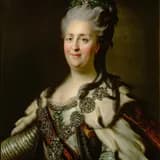
Catherine undergoes smallpox inoculation herself, becoming the first person variolated in Russia to demonstrate its safety to her subjects.
In the night of 12/23 October 1768 (Old Style/New Style), Catherine II took the bold personal step of undergoing variolation—an early, risky form of smallpox inoculation—becoming the first person in Russia known to receive the procedure. She engaged the British physician Thomas Dimsdale to perform the inoculation in secrecy, given the real danger the procedure posed even to the reigning monarch.
Smallpox was a devastating and often fatal disease across 18th-century Europe, killing or disfiguring millions, including members of royal families. Catherine's decision to inoculate herself, followed shortly by her son and heir Grand Duke Paul, was a calculated act of public health leadership: by risking her own life, she sought to demonstrate the procedure's safety and encourage its adoption across the Russian nobility and eventually the broader population.
The gambit succeeded both medically and symbolically. Catherine recovered without serious complications, and her example catalyzed a wave of inoculations among the Russian aristocracy. She commissioned commemorative medals and had Dimsdale ennobled and richly rewarded. This episode stands as one of the earliest instances of a head of state using personal example to promote public health policy, predating widespread vaccination campaigns and reflecting Catherine's Enlightenment-influenced belief in rational, scientifically-informed governance.