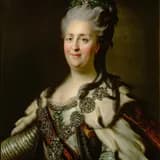
Catherine signs a decree secularizing most Russian church lands and abolishing the Cossack hetmanate in Ukraine, centralizing state power.
On 7 February 1764 (Old Style; 18 February Gregorian), Catherine II signed a sweeping ukase that secularized the vast majority of monastic and church landholdings across Russia, transferring them to state administration. This decree dramatically curtailed the economic independence of the Orthodox Church, which until then had controlled enormous estates and serf populations.
The same broader policy period saw Catherine abolish the office of the hetman—the traditional elected military and political leader of the Ukrainian Cossacks—replacing it with direct rule from Saint Petersburg through the Little Russian Collegium. This ended centuries of semi-autonomous Cossack self-governance in Ukraine and represented a major step toward the centralization and Russification of the empire's peripheral territories.
These reforms exemplified Catherine's broader statecraft: consolidating imperial authority, reducing the power of rival institutions (whether ecclesiastical or regional), and funding an expanding, modernizing state through redistributed church wealth. While controversial and resisted by clergy and Ukrainian elites alike, the secularization dramatically increased state revenue and control, funding schools, hospitals, and administrative reforms elsewhere in the empire. The abolition of the hetmanate also set a precedent for the empire's treatment of subject nationalities that would shape Russian-Ukrainian relations for generations.