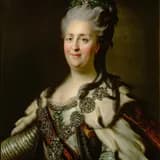
By Catherine's order dated 11 September 1787, the first complete printed Arabic Qur'an in Russia is produced for free distribution to Muslim subjects.
On 11 September 1787, by order of Catherine II, the printing house of the Academy of Sciences in Saint Petersburg produced the first complete printed edition of the Qur'an in Arabic within Russia. This edition was distributed free of charge to Muslim subjects across the empire, particularly in newly incorporated territories with substantial Muslim populations such as Crimea and the Volga region.
This initiative reflected Catherine's broader policy of religious tolerance toward Islam, a notable departure from earlier Russian rulers' often repressive approach to non-Orthodox faiths. Catherine had earlier established the Orenburg Mohammedan Assembly (1788) to help administer Islamic religious affairs within the empire, seeking to integrate rather than forcibly convert her Muslim subjects, particularly as the empire's borders expanded to include large Muslim populations following the annexation of Crimea.
The printing of an accurate, complete Arabic Qur'an using specially cast Arabic type was a technically significant achievement for Russian printing at the time, requiring specialized typographical expertise. This act of state-sponsored religious publishing helped cement loyalty among Muslim populations to the Russian crown and stood as a pragmatic example of Enlightenment-era religious pluralism policy, even within an autocratic empire. It set a precedent for subsequent tolerant policies toward Islam in the Russian Empire and demonstrated Catherine's sophisticated approach to governing a multi-confessional, multi-ethnic state.