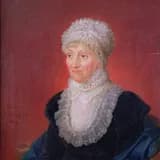
Herschel, along with Mary Somerville, became the first women elected Honorary Members of the Royal Astronomical Society.
On 29 January 1835, Caroline Herschel and Mary Somerville were jointly elected as Honorary Members of the Royal Astronomical Society, becoming the first women in history to hold this distinction. This landmark decision came nearly seven years after Caroline had received the Society's Gold Medal, yet full or honorary membership had remained closed to women.
The election of Herschel and Somerville represented a significant, if still limited, crack in the institutional barriers that excluded women from formal participation in scientific societies throughout the eighteenth and nineteenth centuries. Even as honorary members, neither woman was granted the full voting rights or privileges of ordinary (male) fellows, illustrating the persistent, layered nature of gender discrimination within scientific institutions of the period.
Nonetheless, the honor was a public, institutional acknowledgment of the immense contributions both women had made to astronomy and mathematical science. For Caroline, by then 84 years old and living back in Hannover, it capped a lifetime of observational work, cataloguing, and comet discoveries that had reshaped what was believed possible for a woman in science.
This joint election is frequently cited by historians of science as a milestone moment, symbolizing the gradual, grudging opening of formal scientific recognition to women, decades before women could become full fellows of the Royal Astronomical Society (which did not occur until the early twentieth century).