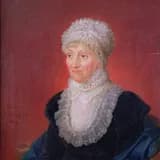
Caroline Herschel died in Hannover, Germany, at the age of 97, having lived to see her scientific legacy widely recognized.
Caroline Herschel died on 9 January 1848 in Hannover, Hanover (present-day Germany), at the remarkable age of 97. She had returned to her native city in 1822 following the death of her brother William, spending her final decades continuing her astronomical calculations and corresponding with prominent scientists of the era.
By the time of her death, Caroline had witnessed her once-marginal status as a woman in science transformed into widespread recognition: she had received the Gold Medal of the Royal Astronomical Society (1828), honorary membership in that same society (1835), and the Gold Medal of the Prussian Academy of Sciences (1846), among other honors from across Europe.
Her death marked the end of a life that had spanned nearly a century and encompassed extraordinary scientific achievement despite the severe social and institutional barriers facing women of her time. She was buried in Hannover alongside her parents, with a lock of her brother William's hair placed in her coffin at her request, symbolizing the deep personal and professional bond the siblings shared throughout their lives.
Caroline Herschel's legacy endured well beyond her death: her comet discoveries, her contributions to star catalogues, and her status as the first professionally paid female astronomer inspired generations of women in science, and her name lives on through the lunar crater C. Herschel and the asteroid 281 Lucretia, named in her honor.