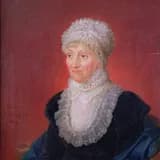
At age 96, Herschel became the first woman awarded the Gold Medal of Science by the Prussian Academy of Sciences, on the recommendation of Alexander von Humboldt.
On 30 December 1846, the Prussian Academy of Sciences awarded Caroline Herschel its Gold Medal of Science, making her the first woman to receive this honor. The award came near the very end of her long life, when she was 96 years old, and is believed to have been championed by the renowned naturalist and explorer Alexander von Humboldt, who greatly admired her contributions to astronomy.
This recognition from one of continental Europe's most prestigious scientific academies underscored the international reach of Caroline's reputation. Decades after her most active observing years, her earlier discoveries of comets, nebulae, and her painstaking catalogue work continued to be recognized as foundational contributions to astronomical science.
The award came at a time when Caroline, having returned to Hannover in 1822 after the death of her brother William, lived out her final years in her native city, continuing to correspond with astronomers and receive visits from scientific dignitaries who sought her counsel and reminiscences of her groundbreaking career.
Coming just weeks before her death in January 1848, this medal represented a fitting capstone to an extraordinary scientific life—one more instance of formal institutional recognition finally catching up with the reality of a woman's exceptional scientific achievement, in an era when such honors were almost exclusively reserved for men.